A Man is Off-Kilter

I haven’t seen very many Stanley Kubrick movies, though I learned to my surprise a few years ago that he was responsible for one of my favorite childhood action movies, Spartacus. A few weeks ago, I watched his World War I film, Paths of Glory, starring Kirk Douglas (like Spartacus). The film is about a French general who accuses his troops of cowardice after a failed charge. Three soldiers are randomly selected to face a kangaroo court martial with the sentence of death hanging over their heads. Their colonel, played by Kirk Douglas, argues for the defense. So it’s a combination war film and courtroom drama (unlike Spartacus).

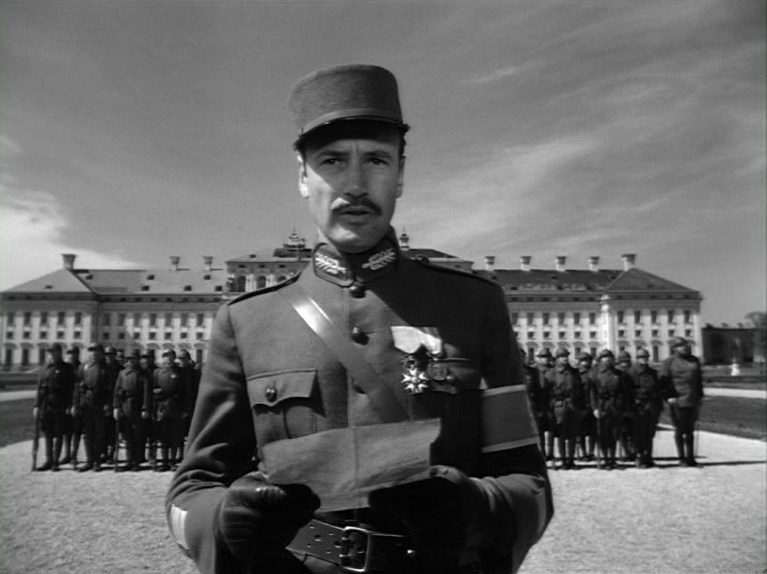
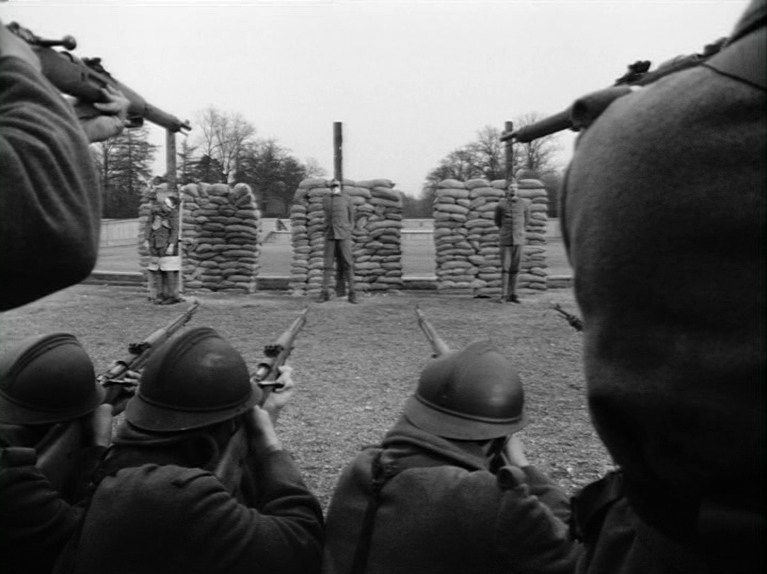
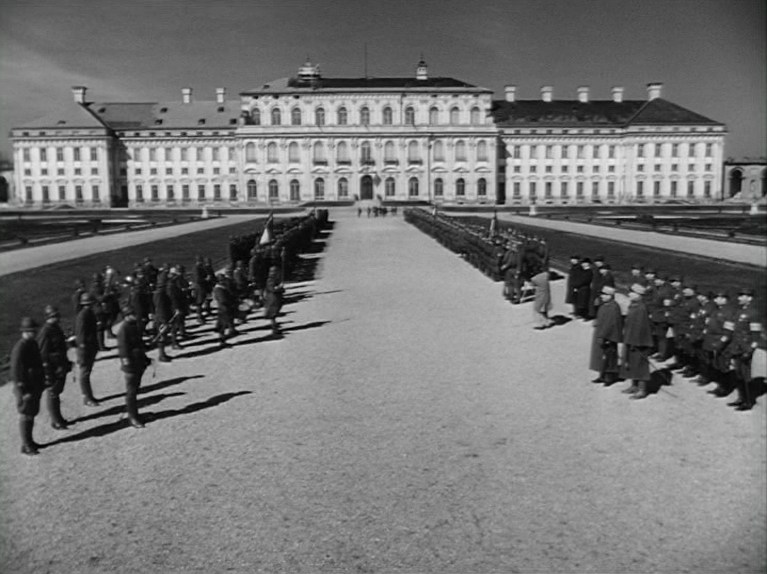
Though I haven’t seen many Kubrick films, I have read enough to know about his famous perfectionism. He often shot close to a hundred takes of a scene before he was satisfied. I also knew he was a photographer, so I expected Paths of Glory to be a visual delicatessen. I wasn’t disappointed. The film is beautiful, light and shadow playing off one another in every frame. Kubrick made good use of his locations, too, especially during the court martial and execution scenes, which were both shot at Schloss Schleissheim in Germany near Munich. I was surprised, though, that the cinematography wasn’t more… well, symmetrical, I guess. I noticed this most in the execution scene. Take a look at the screenshots below (thanks, film-grab.com — one of the best places out there for cinematographical references).

38175017531755175616

Nudge the camera in any of these shots and you’d have a perfectly balanced frame. Especially that first one! Come on, why isn’t the accused in the center centered under the archway? It could be an aesthetic choice. As a photographer, Kubrick probably spent a lot of time looking through a lens. (The last screenshot above is practically balanced in its imbalance.) He may have chosen to frame the film like this for a greater sense of realism. War is messy, so is making movies. The rough-and-readiness of the shots do make you feel like you’re there, witnessing the events unfold. Or it could be that the production schedule was rushed, the crew were harried, and nobody could be bothered to make sure both sides of the building were in the frame. Not likely, given the director’s aforementioned perfectionism.

Thinking about that word, “imbalance,” I wonder if Kubrick is communicating something by intentionally framing the action in this slightly off-kilter way. In the story, high-ranking officers shoot three innocent soldiers rather than own up to their mistakes. The structure of responsibility fails. The world skews. Kubrick may have translated this sense of unreality into the pictures themselves. A balanced frame would imply that justice is being done and all is right with the world. The story insists that all is not right, and what better way to underscore this than through slight imperfections in the way the characters are presented?
A Man Begins His 30th Year

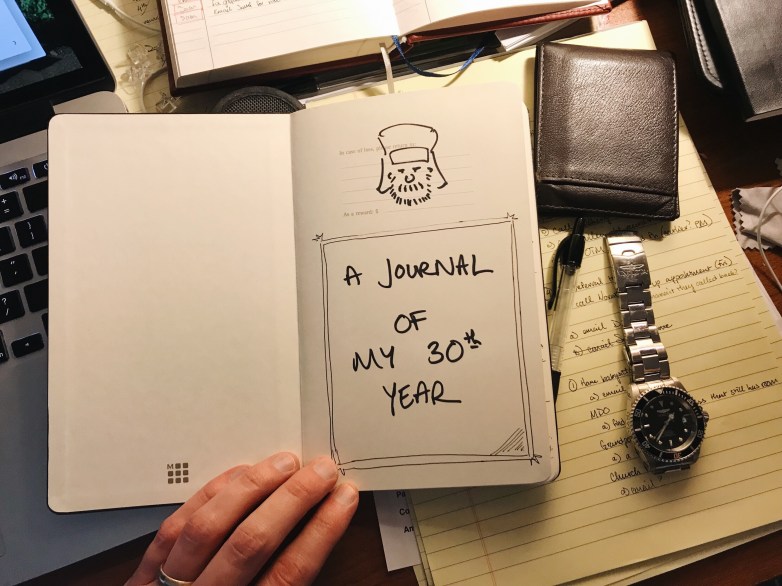
New year, new journal. My last one isn’t actually full yet, but this one was a Christmas gift and deserves to be used. I’ll keep the old around as a commonplace book. (My most recent commonplace? This, from Gary Keller: “In every endeavor, one action counts for more.”)

When I get something new, I try to scuff it, bend it, or write in it as soon as possible. A fledgling habit for me, since I have a pen that I was given as a child that I never took out of its box because I didn’t want to “ruin it.” Use it up is my new motto. Pack dirt around it and let it grow. The haphazard drawings above are my attempt to plant this journal ASAP.

I’ve been dreading this year for I don’t know how long. 2019, the thirtieth since I was born. Somehow I got the idea that if I hadn’t directed a feature film and written a best-selling novel by the time I was thirty, I’d never do either. Rationally, I no longer believe that. But subconsciously, it’s pretty good motivation for getting to work. My new journal will be the atlas of my descent into the land of doubt and discovery that lies ahead. Even if it doesn’t result in a film or a novel, I’m sure this year will be be a year of change for the better. May my old ways die.

Truly, truly, I say to you, unless a grain of wheat falls into the earth and dies, it remains alone; but if it dies, it bears much fruit.

A Man is Playing a Role

Ian Marcus Corbin writes in the Weekly Standard about the bizarre disjunction between how courteously his colleagues interact with those with different political or cultural views in real life and how nastily they attack them on social media. Some people are born with certain advantages, Corbin admits, and some people are unfairly treated based on how they look, dress or act. And yet…

It is possible to acknowledge all of this, however, and still be struck by the wild imbalance between our lived experience of one another and the verbal portrait of ourselves that we daily paint on social media. Perhaps I’m not treated like a ravening predator in my personal relationships because I’m “one of the good ones” in my identity category. Fine. Many chauvinistic group-ideologies are willing to make exceptions for exceptional individuals. But I don’t think that’s what’s going on here; I don’t think that I get a special pass and all of the other white men in my acquaintances’ path are treated like monsters. Rather, for many of us, our public, impersonal lives contain a much higher percentage of status-seeking performance than our day-to-day interactions. We’re playing roles.

Last semester, I taught a class on television and culture (and again this upcoming semester). The sentence I bolded at the end of that quote strikes me as particularly relevant to that topic. One consequence of living so much of your life in front of a TV screen is that you start to believe that TV is reality and that your life is a shoddy illusion. Its in TV’s best interests to keep you watching, and the way to do that is to beat into your skull the fact that television is where life’s meaning truly lies. In his essay on TV, “E Unibus Pluram,” David Foster Wallace describes it like this:

The modes of presentation that work best for TV—stuff like “action,” with shoot-outs and car wrecks, or the rapid-fire “collage” of commercials, news, and music videos, or the “hysteria” of prime-time soap and sitcom with broad gestures, high voices, too much laughter—are unsubtle in their whispers that, somewhere, life is quicker, denser, more interesting, more… well, lively than contemporary life as Joe Briefcase knows and moves through it. This might seem benign until we consider that what average Joe Briefcase does more than almost anything else in contemporary life is watch television, an activity which anyone with an average brain can see does not make for a very dense and lively life. Since television must seek to compel attention by offering a dreamy promise of escape from daily life, and since stats confirm that so grossly much of ordinary U.S. life is watching TV, TV’s whispered promises must somehow undercut television-watching in theory (“Joe, Joe, there’s a world where life is lively, where nobody spends six hours a day unwinding before a piece of furniture”) while reinforcing television-watching in practice (“Joe, Joe, your best and only access to this world is TV”).

If anything has changed since Wallace wrote that essay, we’ve become more involved in these “modes of presentation.” Now, we don’t join in only in our minds, but in our actual lives. We are all living “presented” lives. We’re all playing roles.

A Man With Two Faces

Ah, January. Looking back and forward. One of those points in time when a man believes he can change. The past has no bearing on him now! It does feel like turning a corner, doesn’t it? Last year’s ugly road is out of sight and all the future’s open. Of course, we all find, soon enough, that we’re walking the same path as last year.

Rather than make resolutions, I like to set innumerable goals for myself and accomplish half of them. But goals are poor blog fodder. I’d much rather read about what someone has done than what they’d like to do. And since this blog is all about what I like, I’ll refrain from listing any goals here.

But a new year is still a good moment to step to one side and have a good look at time. So here are a few things that have occupied my online attention lately.

Alan Jacobs, Baylor professor, always provokes thought. His blog is here and he also posts on a micro.blog here.

Joshua Gibbs, high school teacher, posts regular articles about classical education and the pursuit of virtue on his blog at the Circe Institute site. I also have his book on my shelf, and you should, too. Josh’s bizarre, provocative status updates are one of the few things that make me sad to leave Facebook.

I have been tempted many times to bid Twitter sayonara, as well, but there are a couple people who still pass along interesting opinions and articles without dancing on the political fence every chance they get. Zack Stentz is one of those and Adam Roberts is another. The thing I appreciate about both of them is that they agree with me on almost nothing, ideologically, but are always thoughtful and willing to listen.

I’ve tried not to get sucked into the latest internet fad – newsletters – but despite my best efforts, I’m subscribed to a handful.

Micah Mattix has an almost-daily newsletter called Prufrock News, which I never have time to fully digest before the next one arrives in my inbox. He links to writing about literature and literary doings, along with the occasional political or cultural article. Almost every newsletter includes link to a photo and a poem and a brief summary of some new book that Micah is excited about.

Recomendo is a newsletter headed by Kevin Kelly, future-writer and co-founder of Wired. Every Sunday, he and two of his friends recommend two useful or interesting things apiece (for a total of six). I say things because their recommendations vary from books to websites to Youtube channels to scissors to keyboard shortcuts. Sometimes the reason for a recommendation makes me snicker, but every couple of weeks, they pass along something that makes me ask myself, “How did I not know about this?” (I have no idea why they spell the name of the newsletter with one M.)

I’ve been subscribed to Mark Athatakis‘s newsletter for a few months. It’s similar to Prufrock, with more commentary.

I signed up for Alan Jacobs‘s newsletter a few weeks ago. It’s mostly a recap of his latest blog posts, but since I’m addicted to all things Jacobs, I am subscribed. I’m having trouble finding the signup page online. When I do, you’ll be the first to know.

And, finally, just this morning, I signed up for a newsletter from a fella named James Wilson, who promises to send the very best freelance writing gigs to my inbox every Wednesday. We’ll see.

There are a few other people whose work I try to keep up with online as much as I can. I’ve let too many good blog posts slip by unnoticed. (It’s nothing personal, Michael Sacasas.) I’ll try to address that in the coming year. Oops! That sounds a lot like a goal or, worse, a resolution. Rewind, erase, etc. I may or may not address that in the coming year. What’s it to you?

Blessings on your 2019, friends and strangers.

More Data is Bad for a Man

Nassim Nicholas Taleb, on data:

In business and economic decision making, reliance on data causes severe side effects—data is now plentiful thanks to connectivity, and the proportion of spuriousness in the data increases as one gets more immersed in it. A very rarely discussed property of data: it is toxic in large quantities—even in moderate quantities. (Antifragile, p. 126)

Taleb defends this in terms of signal versus noise. Signal is information that makes sense. It is useful. You can use it to act. Noise is everything else. The more data you collect, the more chance you have of capturing some sort of signal, right? Actually, the opposite is true, thanks to the limits of man.

It all has to do with time. If you check data rarely, you see a larger slice of time, which lets you filter out anything redundant or irrelevant. You only see value over time. The more frequently you look at data, Taleb says, the more likely it is that most of what you see is noise. Take the example of the newspaper: if you glance at the news once a year, you have a much easier time drawing out the important stories than if you glance once a day. And if you glance multiple times in an hour, as so many with “smart” phones do, you’re filling your mind with noise without a chance for a signal to break through. (Part of the responsibility rests with newspapers, surely. “Newspapers,” says Taleb, “should be of two-line length on some days, two hundred pages on others—in proportion with the intensity of the signal. But of course they want to make money…”)

In other words, the deluge of information robs you of your ability to see things in their proper context. It is not ambivalent, it is actively harmful. A word of wisdom for those who make decisions, such as, say, voting someone into office: the less information you ingest, the clearer your thoughts will be.

A Man Tries a Dollop of Samurai Jack

A offhand comment in some article by Matt Zoller Seitz piqued my curiosity about Samurai Jack, an animated TV show that aired on Cartoon Network in the early aughts. I cast into the Youtube pond, and the first episode I reeled in was the one Seitz mentioned. (I’m sure there’s some eldritch internet cause-and-effect at work there.)

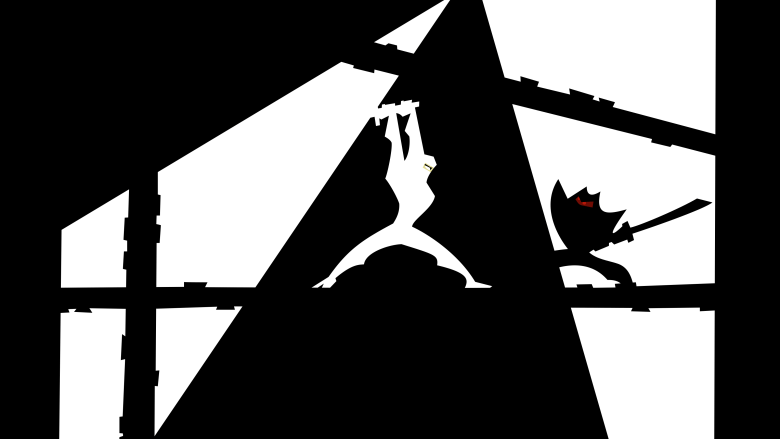
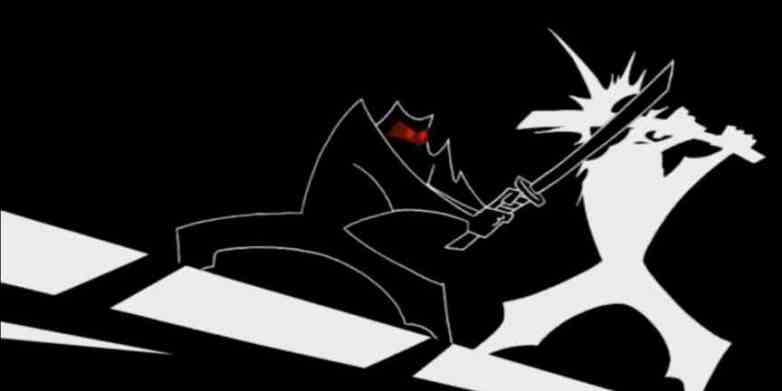
In the episode, Jack is hunted by the Shinobi, warrior of the night, who uses the shadows to sneak up on his quarry. The first half of the episode is forgettable – Jack defends a defenseless village from giant robotic lobsters – but once the Shinobi catches up with him, the two square off in a tall building that is sort of like a mix between a lighthouse and a warehouse. As the sun sets outside and the shadows lengthen inside, it becomes apparent that this is a battle between light and darkness. The Shinobi keeps to the blackness, while Jack hides in the (rapidly diminishing) areas of sunlight. The sequence even switches to black-and-white at one point to emphasize the contrast.

samurai_jack___shinobi_battle_by_faziri-d74dm40

As Seitz says, the amazing part of the fight scene is that it believably portrays what it’s like to fight someone whom you can’t see. The Shinobi becomes visible in the dark for a split-second when Jack’s sword strikes his. The sound of the blades making contact gives Jack (and the audience) a moment’s glimpse of the villain’s whereabouts.

6-samurai-vs-ninja

I also love the way the sunset raises the stakes of the fight. Jack knows that the Shinobi will gain the advantage as night draws on, so he must finish off the ninja before the building goes completely dark. And all this is communicated through animation, mind you. There’s scarcely a line of dialogue in the whole episode. Ah, animation. You never fail to amaze me.

Watch the episode on the tube here.

A Man is Both Cut and Joined

In the [United] States, film is “cut,” which puts the emphasis on separation. In Australia (and in Great Britain), film is “joined,” with the emphasis on bringing together.

~ Walter Murch, In the Blink of an Eye