Smart Poison

There are a lot of reasons to say no when your pre-teen asks for a smartphone. One of the most obvious reasons is that smartphones give you unfiltered and unlimited access to entertainment, which isn’t a good thing for anyone, least of all teenagers. It’s like carrying around a TV and video game console in your pocket. (I mean, that’s exactly what it is.)

Almost more detrimental than constant entertainment is social media. (I’d throw texting in there, too.) Jean Twenge has been studying teen mental health for ten years now and documented some disturbing trends in her book iGen. Her hypothesis was that the spike in teenage depression was caused by smartphones and social media. Not everyone was convinced, and a lot of other explanations were proposed. In this recent newsletter, Twenge looks at thirteen alternative explanations for “the high levels of distress among teens,” including the economy, COVID, school shootings, and climate change. It should come as no surprise that she has good reasons for dismissing all of them.

Engineering and Liberal Arts

— Everyone gets a double major: engineering and history. That’s it. That’s all we offer. There are some required history survey courses that you take in a sequence, and then a bunch of electives. The capstone is probably a history of technology course, but it comes after and in addition to the macro- and micro-histories you’ve been studying all along. You wouldn’t have to do a bunch of integrated “context and ethics” in a technology course if you just said: Everybody studies these two things, period. There’s no complementary “rounding out” in some vague hand-wavey form. You just don’t get prepared unless you have history, full stop.

— Everyone does a 2 + 1 + 2. Instead of students cycling out from liberal arts colleges to engineering programs for a year, it’s the opposite: You come to engineering school, spin out for a deep immersion in a liberal arts environment, maybe one that also serves as your study abroad, then come back and finish.

— Everyone gets an engineering degree, but the other requirement is a Cultural Life Program, such as the one at Furman. Over four years you attend lectures, concerts, and museum exhibitions, a lot of which are your choosing, but they add up to something like 60 hours of cultural education and a required thesis course.

Sara Hendren, “ways you could remake an engineering school”

Tools That Flow

Fast software is not always good software, but slow software is rarely able to rise to greatness. Fast software gives the user a chance to “meld” with its toolset. That is, not break flow. When the nerds upon Nerd Hill fight to the death over Vi and Emacs, it’s partly because they have such a strong affinity for the flow of the application and its meldiness. They have invested. The Tool Is Good, so they feel. Not breaking flow is an axiom of great tools.

A typewriter is an excellent tool because, even though it’s slow in a relative sense, every aspect of the machine itself operates as quickly as the user can move. It is focused. There are no delays when making a new line or slamming a key into the paper. Yes, you have to put a new sheet of paper into the machine at the end of a page, but that action becomes part of the flow of using the machine, and the accumulation of paper a visual indication of work completed. It is not wasted work. There are no fundamental mechanical delays in using the machine. The best software inches ever closer to the physical directness of something like a typewriter.

Craig Mod

Cuneiform and Moveable Type

When the Sumerians wanted to get a message across, they tended to write it in cuneiform on clay bricks. As writing the same message (“this wall belongs to King Lugalzagesi”) over and over again by hand would have become tedious, they created a stamp to speed up the process, a la the DMV.

Signs that made up the king’s inscription could be cut in reverse on a block and used to stamp the bricks. This first kind of printing went on for almost two thousand years. Remarkably, its use was reserved for mundane bricks, and no other purpose. Other types of text were not required in large numbers and there may also have been cultural resistance to the use of stamping for learned texts.

Why not produce poetry and other “learned texts” en masse? Perhaps to increase their value through scarcity. Perhaps because mindlessly stamping wet clay didn’t seem like an appropriate way to reproduce the text of a great epic.

Regardless, the stamp was a clever invention, perhaps even more so than we might think:

In a few stamped examples some signs are upside down. The best explanation is perhaps that individually mounted wedge signs had been carelessly replaced in the matrix after cleaning out the stamp. Here we could have not only printing, but even moveable type, two thousand years before Gutenberg!

Cuneiform, Irving Finkel and Jonathan Taylor

Oh, you crafty ancient Sumerians. Truly, there’s nothing new under the sun.

What is “Tech?”

Once upon a time, the word “technology” might have been applied to something such as a new design element that reduces frictional losses in a gear set. Today, the word is often shortened to “tech” and it typically means: finding new ways to insert a layer of fussiness into some aspect of life that is not yet subject to fussiness “optimization”, and then collecting rents from the friction this introduces.

Matthew Crawford

A Pencil Named Steve

The Turing Test is one which has baffled me since I first heard about it. Basically, when Turing was asking himself what it would mean for a computer to become sentient, he decided that he would count a computer as sentient if, in conversation with it, you were unable to tell whether or not it was a human being. 

This struck me as bizarre at the time, and more bizarre as we have seen the test be run thousands of times in peoples’ conversations with ChatGPT and its ilk. (For those who missed it, in June of last year, Blake Lemoine, one of Google’s engineers, was fired after he became convinced, “talking” with one of the prototype natural language simulations, called LAMBDA, that the chatbot was in fact conscious). If there is one thing humans are good at, it’s believing things to be persons. It’s like… very easy for us, and very hard for us not to do. We are persons, and we anthropomorphize absolutely everything. I used to be scared of the curtains in my parents bedroom because in the dark it seemed like there were people standing behind them. The tendency to see faces in patterns is so pervasive that it has a name – pareidolia. 

We are even prone to do this if we make the thing in question: if we paint a frowny face on a rock we kind of feel like the rock might be unhappy. If you give a child a stuffy, you know that child is going to immediately begin to ascribe personhood to it, even if it is a stuffed animal you made and she saw you making it. Of course humans would be able to make a computer program that would be able to fool other humans into thinking it was a person, and in Lemoine’s case, able to fool himself. We’re incredibly good at making personish things and incredibly good at then kind of thinking they are persons. 

Just to point out, this tendency, to make personish things, then get excessively impressed with and excited about them and ascribe agency and maybe power to them and ask them for help with things, is noted in the Old Testament a good bit; it is called idolatry.

Susannah Black Roberts

This sort of thing reminds me, as it always does, of Steve the Pencil:

Spotifired

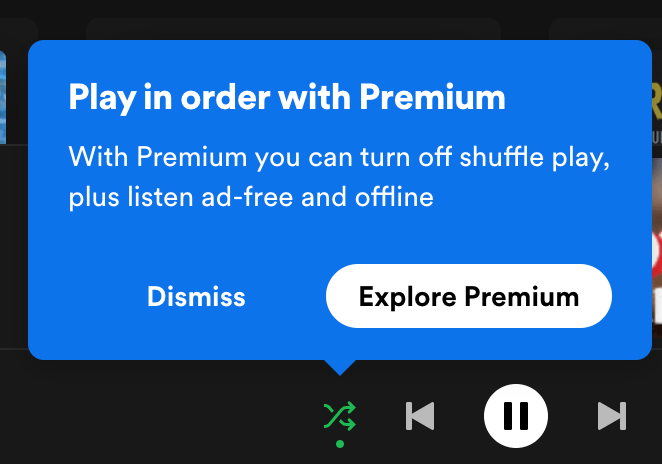
I should have seen this coming. The most inconvenient thing about the Spotify app (the inability to play albums or playlists straight through without paying for Premium) has now becomes the most inconvenient thing about the desktop version. It’s not a design flaw, of course. It’s just one of the sticks they use to prod you into forking over your money.

As someone who likes to listen to albums all the way through, I find this extremely frustrating. It’s not that it’s unfair—what’s unfair is how much music I have gotten to listen to over the years without paying for it. Still, I imagine that, from now on, I’ll simply listen to albums on Youtube, where more and more artists are putting their music.

The IMDb app

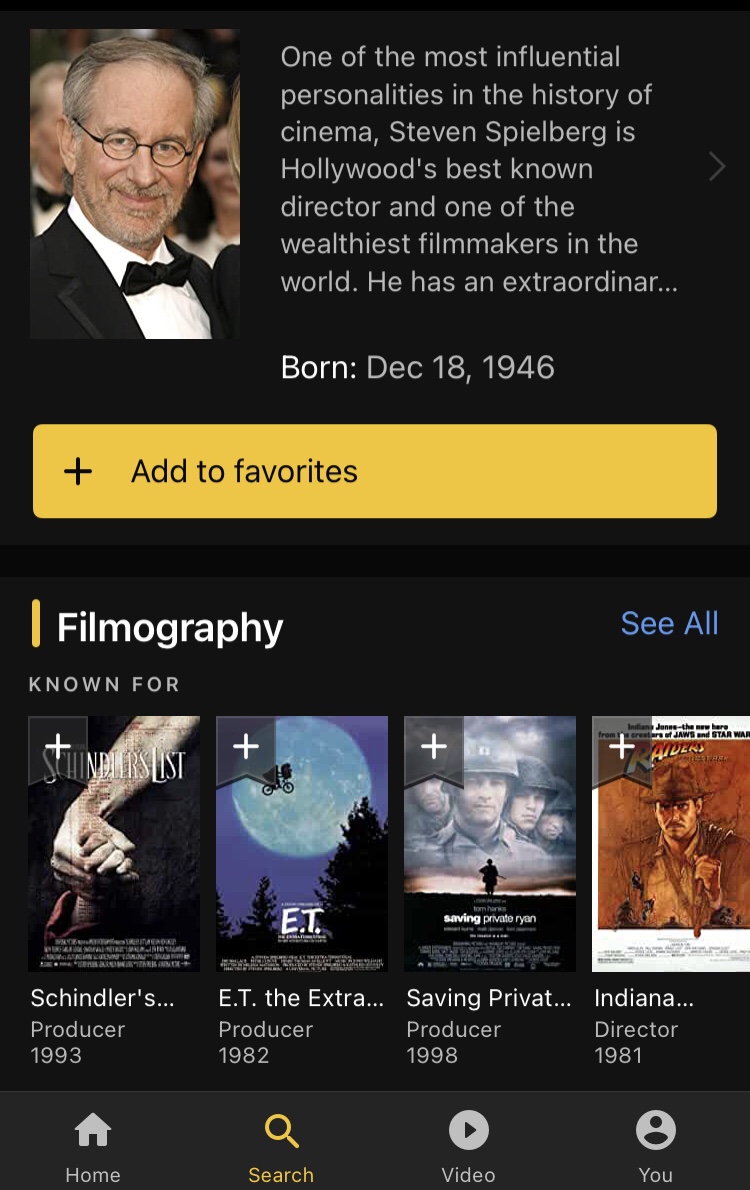
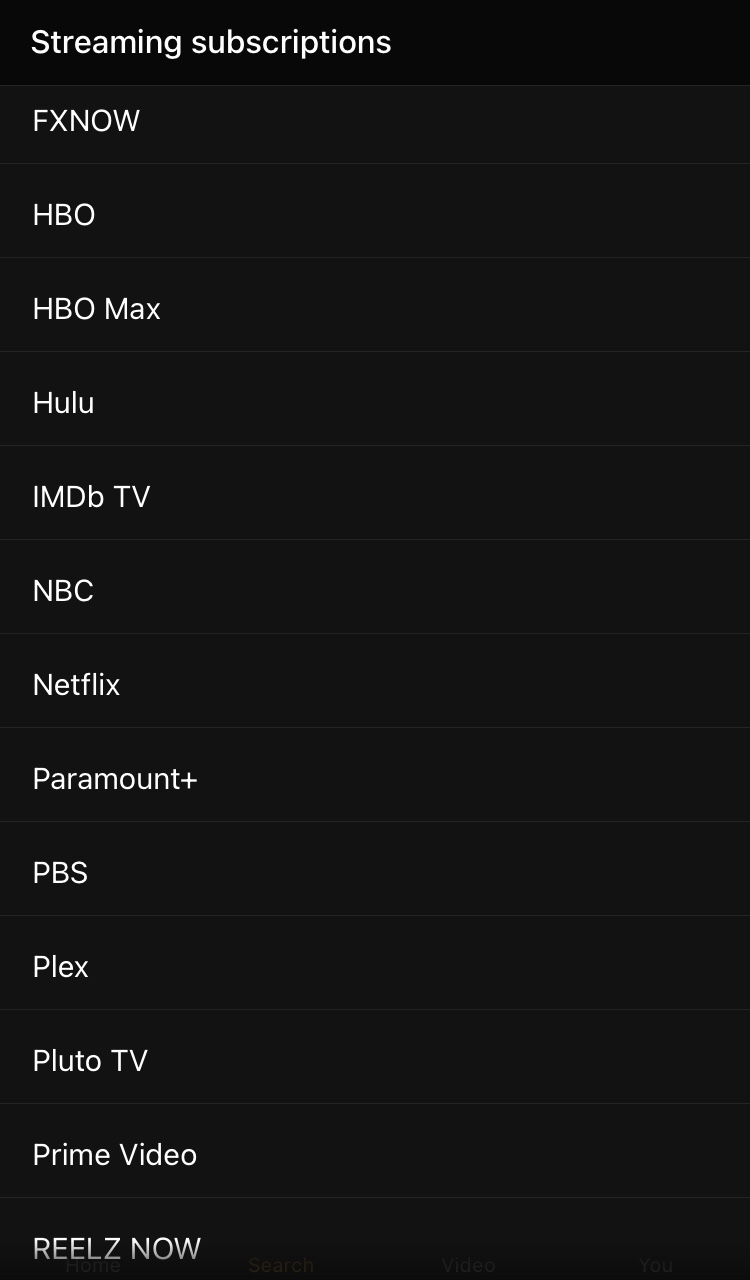
You may not know that the IMDb iOS app lets you sort lists by where they are currently streaming. For a long time, Instantwatcher.com was where I went to find out whether anything worthwhile was available on Netflix or Amazon. The IMDb app is way better. Let’s say you’re a huge Spielberg fan. Go to his filmography page and tap Streaming at the top. You’ll see a list of all sites that are currently streaming anything by Spielberg. Here are some screenshots to illustrate.

Writing Software

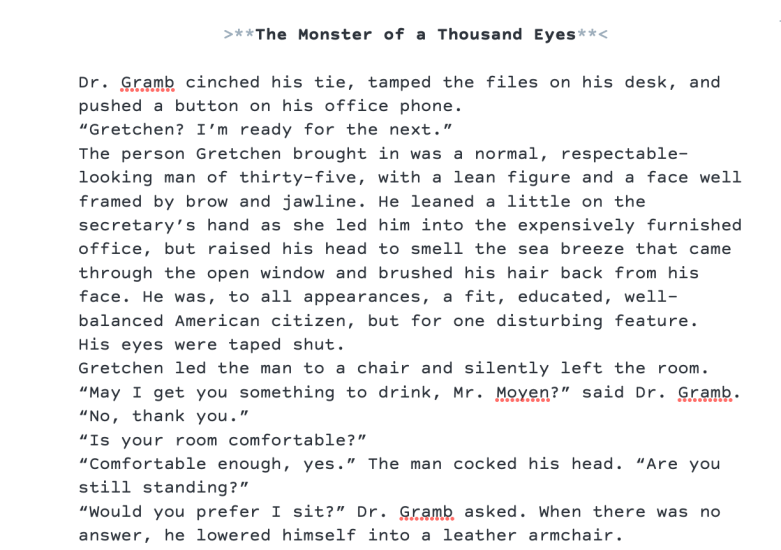
Except when forced to do otherwise, I use Highland or Highland 2 to write screenplays. Recently, I’ve been using it for rough drafts of all documents because it’s fast and doesn’t have as many bells or whistles as, say, MS Word. I’m not sure I like it, though. It works for screenplays because you what you see in the document is more or less what you’ll see on the page.

Visualizing my writing on the page helps me imagine the reader, which helps me make small adjustments to clarify whatever I’m trying to get across. Articles and stories, however, look very different in the Editor than they do in the Preview.

Not being able to see the page makes me write faster, but less coherently. At some point in the writing process, I switch over to whatever word processor I’ll use to make the final adjustments. Lately, I’ve been making the switch sooner.

The Value of E-Books

In Monday’s issue of Time’s Corner, I asked my readers this question: What are ebooks worth to you? What are your ebook reading practices? The replies not only included a broad spectrum of reading practices, they also contained a variety of opinions on the value of ebooks. I decided to focus on the former category in today’s Thursday Thread. The latter is included here.

In my mind, ebooks should always be cheaper than a new hard copy — there is no iterative cost to an ebook, and they have the drawback of being not only a non-transferrable purchase but also being technically only licensed to me and not owned by me. In practice, I’m usually willing to pay about 10% of the print price for an ebook. I started to say I would pay up to $5, but if the book is only $10 in print, I wouldn’t pay more than maybe $1 or $2 before I just bit the bullet and bought a new or used copy. But if I see an ebook listed for more than $5, I almost immediately dismiss it; it would have to be a very expensive book, like Frisardi’s translation of the Convivio which cannot be had for less than $125, before I would consider paying a double-digit price for the ebook.  

Melissa

Regarding value: publishers are going to charge whatever is the most they can get without losing significant sales numbers, not listen to this logic, but [ebooks] should cost the hard cover price, minus whatever percent of that price represents the physical production of the book.

Daniel

ebooks are worth a lot, depending on the content. ebooks are products, just like books. they’re digital, which is (i think) the crux of this discussion, and people are still deciding if they like paying for digital things. however, placing worth on something because you can touch it is the wrong way to think about worth.

worth has to do with output compared to input. you pay for spotify because the enjoyment you get from listening to music is worth $10/mo to you; you pay for a car because the usefulness of a car is worth $10K or $200/mo. cost ultimately comes down to how much people will pay for the product, so the question of worth comes down to whether or not the output justifies the (cost and time) input.

books (e- or not) have two potential outputs: enjoyment and ideas. if you’ll get $500 worth of ideas out of a book, then it should be worth up to $499. if you get 8 hours of enjoyment out of a book, the amount you’re willing to pay for it should depend on how much you value your leisure time. it’s important to keep in mind that a book’s output isn’t binary: you’ll get ideas and enjoyment, and you should factor in both.

i suppose this stance begs a few questions, so i’ll try to address some counter-arguments at a high level:

1. yes, there are counter examples. some books shouldn’t be ebooks, and i suppose some people shouldn’t buy ebooks.

2. maybe different people should pay different amounts for the same book. maybe there should be a variable cost, or a pay-what-you-want model for books. some people will get more value out of a book than others, and maybe those people should be able to recognize the value and compensate the author for it.

3. no, i probably wouldn’t pay $500 for a book, but i have paid that much for what is essentially an ebook because i believe i will get at least that much value out of it over the next several years.

Sheffield

To me, one of the main reasons why ebooks are worth less is because they tend to have copy-protection software, so there’s no guarantee that they’ll even work in 5 or 10 years. My physical books will be good for the rest of my life, and in some cases probably my kids’ lives.

The “they don’t use paper” argument doesn’t make much sense to me. My willingness to pay for a book is determined by how much value I get out of it, not how much it cost to produce. If you printed Pride and Prejudice with one word per page, I wouldn’t suddenly be willing to pay $500 for it because it used so much paper. Conversely, I am sometimes willing to pay more for an audio book than a physical book, because I have much more time in my day for listening than for reading. An audiobook download also doesn’t require paper, but since it’s more useful to me, I’m willing to pay more for it (though if I can get it for free via Hoopla or Libby, I will definitely take that!).

David