Moscow [Idaho] has, according to reliable figures, a greater number of church people than any other city of like size in the United States.
Hiram Taylor French, writing in 1914
Tag Archives: History
Informed Patriotism
Understandably, we’re interested in the economic well-being of our society and we want our kids to be able to get good jobs, but we’ve sidelined citizen formation in the process. We should aspire to make our students more than consumers and workers—we should strive to make them citizens, too.
In view of all of this, it is worth reminding ourselves why civics matters. Simply, the goal of a good civic education is to have thinking citizens. We’re all in charge in this self-governing society. We share the responsibility for this shared experiment in human freedom. We must learn how to talk about politics with one another, how to make sense of the Constitution, and why the American creed of equality and liberty is worth defending.
America is built on the radical notion that every citizen can and should be a good thinker—and the first step to developing the right habits of mind is a knowledge of our Constitution’s first principles. Civics is more than just teaching people that they should vote at election time. It is also more than just factual knowledge, like how many justices sit on the Supreme Court or the functions of the three branches of government. Civics is about reflective knowledge, or what Ronald Reagan called “informed patriotism.”
Hans Zeiger
While I don’t dispute that every citizen should be a good thinker, or that education should improve a person’s reflective knowledge, I do dispute the idea that the two ought to be grouped together. A good education will improve reflective knowledge. A knowing person will be an informed patriot. But it does not follow that the goal of education should be to create good citizens. That’s a side benefit.
In fact, creating “good citizens” has been the goal of American public education for almost two hundred years, and look where it’s gotten us.
As Chesterton said, the true patriot is not the one who says, “My country right or wrong.” No one who loves his country would say that. A true patriot wants his country to be right because he wants what’s best for his country. Of course, in order to believe that, the patriot must know what is right and what is wrong. And there we have the goal of a good education.
Those With Ears to Hear
A passing hostile comment in the second-century pagan critic Celsus shows that the chants used in Christian worship (which he seems to have heard) were not only unusual to his pagan ears but so beautiful that he actually resented their emotive effect as an instrument for dulling the critical faculty.
Henry Chadwick, The Early Church
The Maturity of the Church
It is a paradoxical law of early liturgical study that the greater the biblical element in any given prayer the less primitive it is likely to be.
Henry Chadwick, The Early Church
Cuneiform and Moveable Type
When the Sumerians wanted to get a message across, they tended to write it in cuneiform on clay bricks. As writing the same message (“this wall belongs to King Lugalzagesi”) over and over again by hand would have become tedious, they created a stamp to speed up the process, a la the DMV.
Signs that made up the king’s inscription could be cut in reverse on a block and used to stamp the bricks. This first kind of printing went on for almost two thousand years. Remarkably, its use was reserved for mundane bricks, and no other purpose. Other types of text were not required in large numbers and there may also have been cultural resistance to the use of stamping for learned texts.
Why not produce poetry and other “learned texts” en masse? Perhaps to increase their value through scarcity. Perhaps because mindlessly stamping wet clay didn’t seem like an appropriate way to reproduce the text of a great epic.
Regardless, the stamp was a clever invention, perhaps even more so than we might think:
In a few stamped examples some signs are upside down. The best explanation is perhaps that individually mounted wedge signs had been carelessly replaced in the matrix after cleaning out the stamp. Here we could have not only printing, but even moveable type, two thousand years before Gutenberg!
Cuneiform, Irving Finkel and Jonathan Taylor
Oh, you crafty ancient Sumerians. Truly, there’s nothing new under the sun.
Tekton
Philip Jenkins on the question of whether Jesus was a stonemason, a topic I explored in a newsletter last August. To save you the click, Jenkins, a highly qualified scholar, has found no evidence to support the theory.
A Man is Amazed by an Old Thing
Click here and listen to a recording of Ernest Shackleton telling a story from one of his expeditions to the South Pole. The audio was recorded in 1910 on a wax cylinder. Now, you can listen to it in all its digital glory.
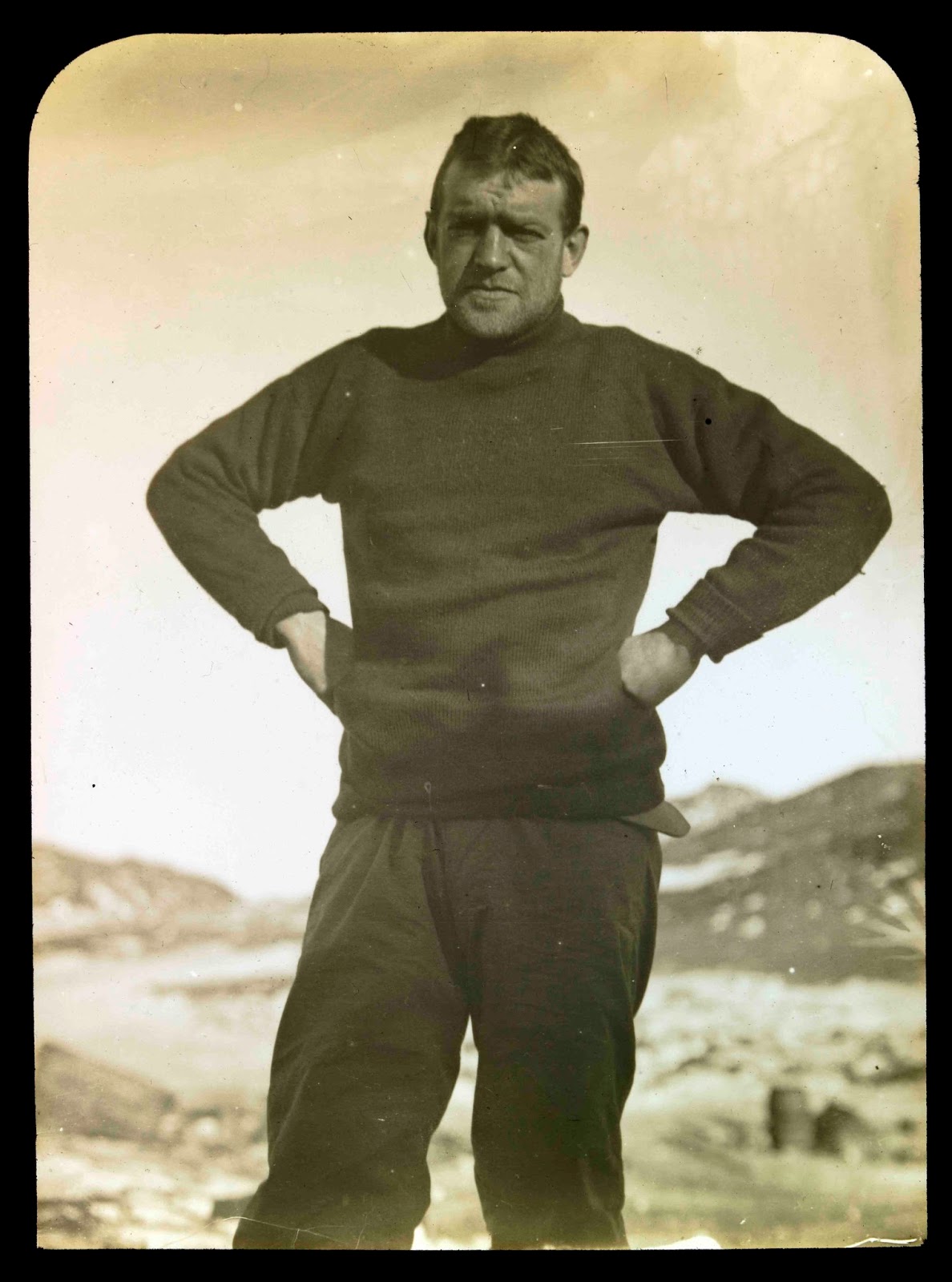
Besides amazing the dungarees off me, this recording reminds me of the relative costs and benefits of different media. A wax cylinder can exist in more or less the same condition for 109 years. But it’s confined to one place. A digital recording can travel the world, but will probably be lost, corrupted, or obsolete a decade from now.
 Christian Leithart