I’ve started filtering my search results by date to get around the explosion of AI-generated writing. I don’t want an LLM explaining Gaudete Sunday or recommending a dermatologist. Give me a human being any day.
Category Archives: technology
Palma
(No, not Brian De.)
I find myself intrigued by the BOOX Palma after reading Craig Mod’s enthusiastic description “A one-handed reading wonder?” With an e-ink screen that operates smoothly? Yes, please.
Yet No One Wants To
There’s a very simple solution to all of this: quit social media.
Smart Poison
There are a lot of reasons to say no when your pre-teen asks for a smartphone. One of the most obvious reasons is that smartphones give you unfiltered and unlimited access to entertainment, which isn’t a good thing for anyone, least of all teenagers. It’s like carrying around a TV and video game console in your pocket. (I mean, that’s exactly what it is.)
Almost more detrimental than constant entertainment is social media. (I’d throw texting in there, too.) Jean Twenge has been studying teen mental health for ten years now and documented some disturbing trends in her book iGen. Her hypothesis was that the spike in teenage depression was caused by smartphones and social media. Not everyone was convinced, and a lot of other explanations were proposed. In this recent newsletter, Twenge looks at thirteen alternative explanations for “the high levels of distress among teens,” including the economy, COVID, school shootings, and climate change. It should come as no surprise that she has good reasons for dismissing all of them.
Blog Museum
This reminds me of an idea I’d still like to see put into practice: a service that pulls posts from old blogs and collects them into a daily digest. I love reading blogs, especially old ones. Scrolling through a bunch of posts from the same author, sometimes written over the course of years, is like reading their journal. It gives you a picture of that writer’s personality and the ideas they’ve wrestled with over the years. It would be exciting to be reminded every so often that such an archive exists.
A Pencil Named Steve
The Turing Test is one which has baffled me since I first heard about it. Basically, when Turing was asking himself what it would mean for a computer to become sentient, he decided that he would count a computer as sentient if, in conversation with it, you were unable to tell whether or not it was a human being.
This struck me as bizarre at the time, and more bizarre as we have seen the test be run thousands of times in peoples’ conversations with ChatGPT and its ilk. (For those who missed it, in June of last year, Blake Lemoine, one of Google’s engineers, was fired after he became convinced, “talking” with one of the prototype natural language simulations, called LAMBDA, that the chatbot was in fact conscious). If there is one thing humans are good at, it’s believing things to be persons. It’s like… very easy for us, and very hard for us not to do. We are persons, and we anthropomorphize absolutely everything. I used to be scared of the curtains in my parents bedroom because in the dark it seemed like there were people standing behind them. The tendency to see faces in patterns is so pervasive that it has a name – pareidolia.
We are even prone to do this if we make the thing in question: if we paint a frowny face on a rock we kind of feel like the rock might be unhappy. If you give a child a stuffy, you know that child is going to immediately begin to ascribe personhood to it, even if it is a stuffed animal you made and she saw you making it. Of course humans would be able to make a computer program that would be able to fool other humans into thinking it was a person, and in Lemoine’s case, able to fool himself. We’re incredibly good at making personish things and incredibly good at then kind of thinking they are persons.
Just to point out, this tendency, to make personish things, then get excessively impressed with and excited about them and ascribe agency and maybe power to them and ask them for help with things, is noted in the Old Testament a good bit; it is called idolatry.
Susannah Black Roberts
This sort of thing reminds me, as it always does, of Steve the Pencil:
Average is the New Zero
As a follow-up to the most recent Scriptnotes, John August wrote a blog post that included one listener’s response:
Language models are built on “training data,” which is the text you feed into a learning process to produce the output. For very sophisticated models, the training data is vast: for something like ChatGPT, it includes something like all the text you can scrape off of the last twenty years of the Internet, or so.
But this means ChatGPT is about as smart as the average writer on the Internet has been over the past twenty years — and indeed, the models that comprise GPT drag the results toward the average, not the extraordinary, because the average has much nicer statistical properties than the extraordinary for companies that seek to produce a marketable, scalable product from their models, which requires the ability to tweak, diagnose, and defend what you’re selling.
Ultimately what these models mean is that with the click of a button you can now be just as good as the average writer who posts content to the Internet, and so the old “average” is now the new “zero.” If you wrote at the average level of the Internet in 2022 you now write at the zero level.
Emphasis in original
Hurrying Through Leisure
The whole attitude seems to be: Let me get through this thing I don’t especially enjoy so I can do another thing just like it, which I won’t enjoy either. This is precisely what Paul Virilio means when he talks about living at a “frenetic standstill” and what Hartmut Rosa means when he talks about “social acceleration.”
Alan Jacobs
I say: If you’re trying to get through your work as quickly as you can, then maybe you should see if you can find a different line of work. And if you’re trying to get through your leisure-time reading and watching and listening as quickly as you can, then you definitely do not understand the meaning of leisure and should do a thorough rethink. And in both cases maybe it would be useful to read Mark Helprin on “The Acceleration of Tranquility.”
This reminds me of two things, both of which I probably learned about from Jacobs.
- This article from 2016 about watching everything on 2x speed (there have been lots of articles about this same thing since then)
- This article about watching everything ex-treme-ly slow-ly
The IMDb app
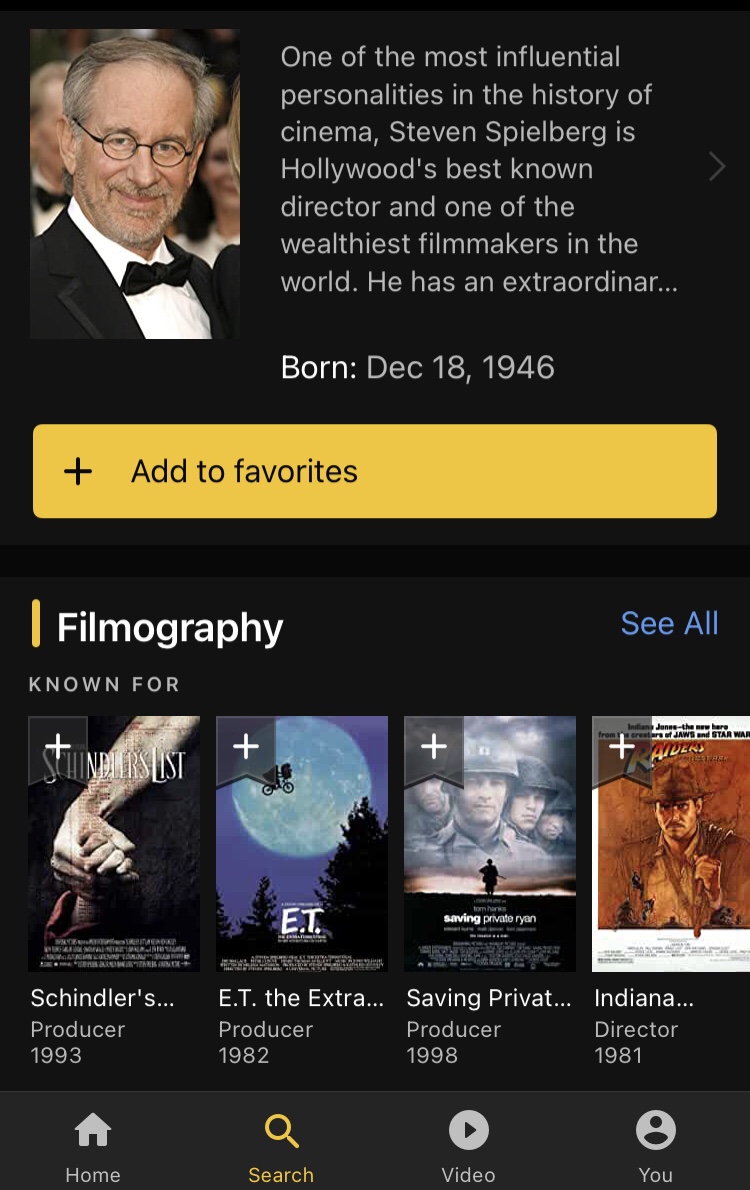
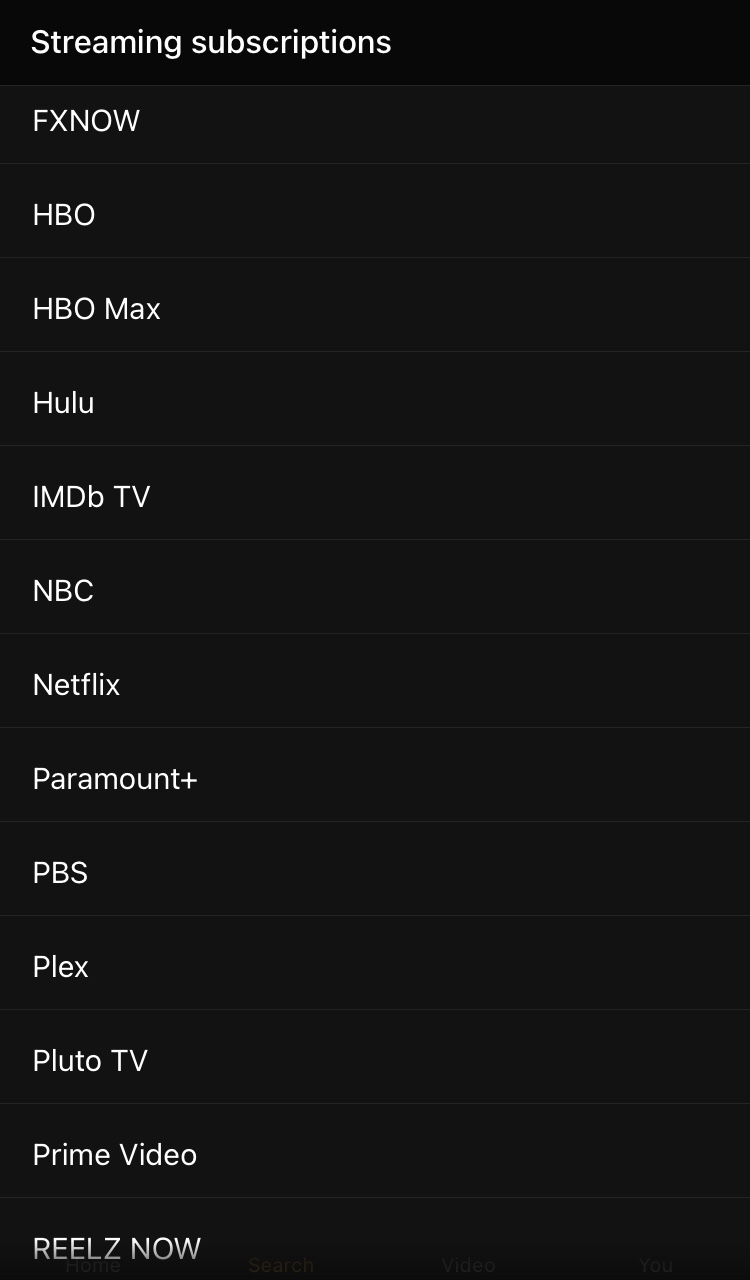
You may not know that the IMDb iOS app lets you sort lists by where they are currently streaming. For a long time, Instantwatcher.com was where I went to find out whether anything worthwhile was available on Netflix or Amazon. The IMDb app is way better. Let’s say you’re a huge Spielberg fan. Go to his filmography page and tap Streaming at the top. You’ll see a list of all sites that are currently streaming anything by Spielberg. Here are some screenshots to illustrate.

Writing Software
Except when forced to do otherwise, I use Highland or Highland 2 to write screenplays. Recently, I’ve been using it for rough drafts of all documents because it’s fast and doesn’t have as many bells or whistles as, say, MS Word. I’m not sure I like it, though. It works for screenplays because you what you see in the document is more or less what you’ll see on the page.


Visualizing my writing on the page helps me imagine the reader, which helps me make small adjustments to clarify whatever I’m trying to get across. Articles and stories, however, look very different in the Editor than they do in the Preview.
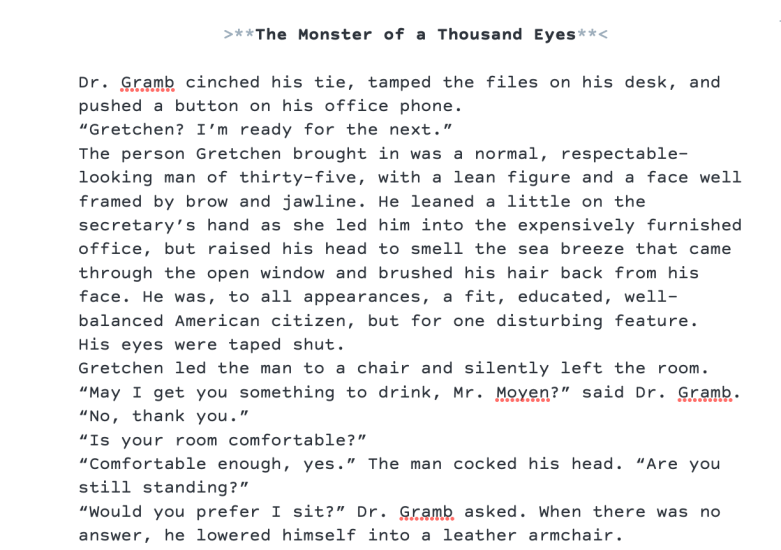

Not being able to see the page makes me write faster, but less coherently. At some point in the writing process, I switch over to whatever word processor I’ll use to make the final adjustments. Lately, I’ve been making the switch sooner.
 Christian Leithart