Adventure requires courage to keep us faithful to the struggle, since by its very nature adventure means that the future is always in doubt. And just to the extent that the future is in doubt, hope is required, as there can be no adventure if we despair of our goal. Such hope does not necessarily take the form of excessive confidence; rather, it involves the simple willingness to take the next step.
From Stanley Hauerwas, “A Story-Formed Community: Reflections on Watership Down“
Author Archives: cleithart
I am alive and have two legs. This state of affairs will hopefully continue for quite some time.
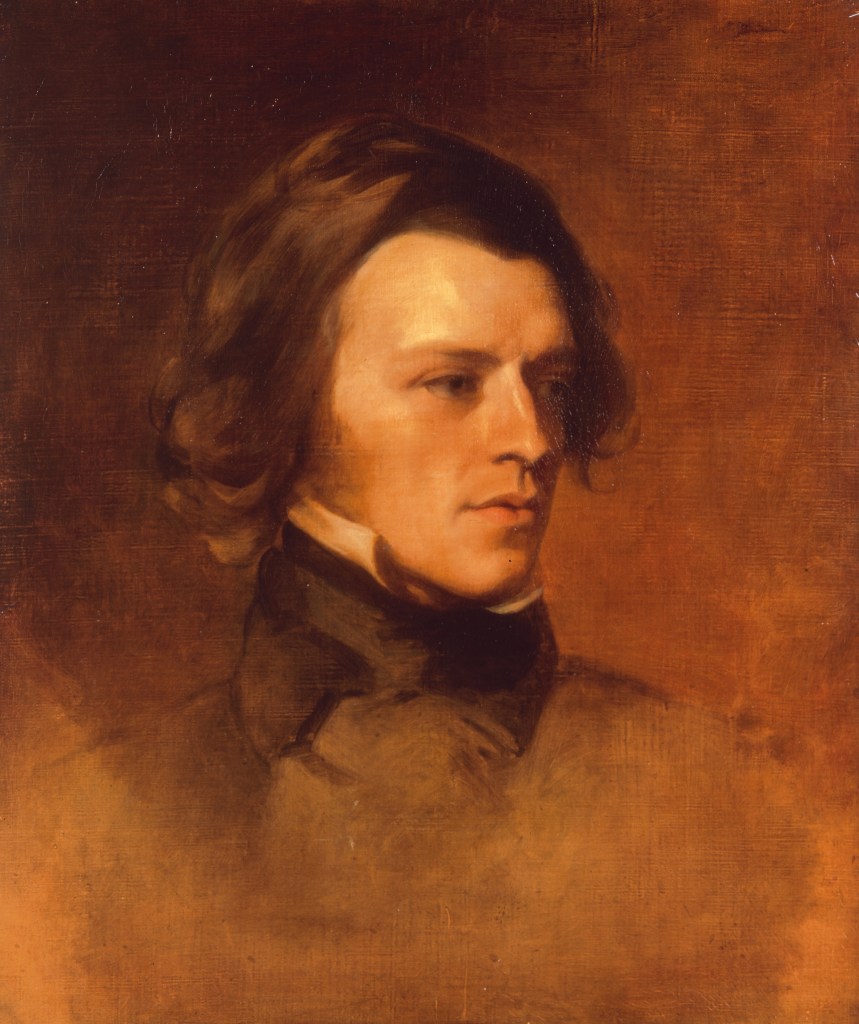
Handsome Alfred
Palma
(No, not Brian De.)
I find myself intrigued by the BOOX Palma after reading Craig Mod’s enthusiastic description “A one-handed reading wonder?” With an e-ink screen that operates smoothly? Yes, please.

Have You Seen This Book?
The spine is black with white or yellow letters
That have those little hands and feet called “serifs.”
About the height of a new pencil
And the width of my index finger,
It has a hammer on the cover
And the word “Poetry” in the title…
No? I’ll have to ask another poem then.
The Latest from Jacobs
The most frustrating thing about Alan Jacobs’s blog is the lack of a comments section. He posts so many thought-provoking things, and then gives me nowhere to put my provoked thoughts. So, here, in no particular order, are a handful of my reactions and comments to various things he’s posted over the past few months.


This post may explain why I just can’t bring myself to worry about ChatGPT in education. I just can’t summon the panic:
Imagine a culinary school that teaches its students how to use HelloFresh: “Sure, we could teach you how to cook from scratch the way we used to — how to shop for ingredients, how to combine them, how to prepare them, how to present them — but let’s be serious, resources like HelloFresh aren’t going away, so you just need to learn to use them properly.” The proper response from students would be: “Why should we pay you for that? We can do that on our own.”
If I decided to teach my students how to use ChatGPT appropriately, and one of them asked me why they should pay me for that, I don’t think I would have a good answer. But if they asked me why I insist that they not use ChatGPT in reading and writing for me, I do have a response: I want you to learn how to read carefully, to sift and consider what you’ve read, to formulate and then give structure your ideas, to discern whom to think with, and finally to present your thoughts in a clear and cogent way. And I want you to learn to do all these things because they make you more free — the arts we study are liberal, that is to say liberating, arts.
Alan Jacobs
The things that I want to teach students have nothing to do with ChatGPT or other “fake intelligences.” Like Josh Gibbs, I’m actually rather pleased that such tools are revealing the mechanistic nature of so many assignments.
Here Jacobs argues that “it is virtually impossible for good art to be made in our place, in our moment” because we—addicted as we are to the Panopticon—are victims of self-censorship, which is the enemy of artistic expression. This dovetails with two other posts: this one on cultivating a quiet “home base” away from the censorious crowds, and—to push back on the idea of the self-sufficient artist—this one on the importance of intellectuals (and, I would add, artists) always having “a living community before their eyes,” that is, a group of people to whom their thoughts and words are directed.
Here’s Jacobs doing what he does best: making fascinating connections between books. His description of The City and the City reminds me of Descent Into Hell by Charles Williams, though in the latter the cities overlap in time, not in space.
Why’s This So Good?
Nieman Storyboard has an ongoing series called “Why’s This So Good?” in which they analyze writing to find out why it’s, you know, so good. When I read this short section of an article by Ed Ruscha describing his burning desire for white jeans, I couldn’t get it out of my mind. This is me trying to figure out why.
In 1951, when I was fourteen, I landed a job in an Oklahoma City laundromat. The pay was respectable–fifty cents an hour, up from forty-five. In a swampy, bunkerlike back room with a large concrete center drain, I had to mix bleach and water together in brown glass bottles for the customers to use. It was sweaty and dank, but I got to listen to a faraway radio, faint but distinct, playing music by the likes of Lefty Frizzell, Hank Williams, and Faron Young.
One day, I saw a news item about the murder of a nurse in Ann Arbor, Michigan. A photograph of one of the teenage killers showed him in handcuffs, being escorted by police. He was wearing what looked to me like white Levi’s. White Levi’s! What style! I was overcome by an immediate urge to get a pair for myself, but after looking around I was told that no such product existed–at least, not in Oklahoma.
Then it came to me: I would make my own. I brought a pair of bluejeans from home, doused them in undiluted Clorox bleach, and placed them in a washing machine. I let them sit for half an hour, the mystery and suspense building. When I finally opened the door, I found, to my astonishment, a pair of pure-white, radiantly glowing Levi’s. A triumph.
Or so I thought. Reaching in to grab them, I felt my hand sweep through a puffy lump of dead white fibres, softer than cotton candy. The rivets and the buttons were the only parts that survived.
At the time, I was banking on white Levi’s coming into fashion. I had to wait twenty years to buy a pair off the rack.”
Ed Ruscha via Put This On
If I were to tell this story to a friend, it would go something like this: “I wanted a pair of white jeans once. I couldn’t find them for sale anywhere, so I decided to bleach some normal blue jeans, but when I did, they melted.”
The strength of Ruscha’s writing here mainly comes from the specific details, obviously. Just to make sure, here it is with the specifics removed:
In 1951, I landed a job in a laundromat. The pay was respectable. In a back room, I had to mix bleach and water together in glass bottles for the customers to use. It was unpleasant, but I got to listen to a radio.
One day, I saw a photograph in a newspaper of a man wearing what looked to me like white Levi’s. I wanted a pair for myself, but after looking around I was told that no such product existed.
Then I decided I would make my own. I brought a pair of bluejeans from home, doused them in bleach, and placed them in a washing machine. When I finally opened the door, I found, to my astonishment, a pair of pure-white Levi’s.
Or so I thought. Reaching in to grab them, I discovered they had disintegrated in the bleach and were ruined.
Here’s what I removed:
- his age (“fourteen”)
- the location of the laundromat (“Oklahoma City”)
- the pay (“fifty cents an hour, up from forty-five”)
- the description of the room (“swampy, bunkerlike… with a large concrete center drain”)
- the color of the glass bottles (“brown”)
- what made the work unpleasant (“it was sweaty and dank”)
- the sound of the radio and the music it played (“faraway… faint but distinct, playing music by the likes of Lefty Frizzell, Hank Williams, and Faron Young.”)
Et cetera.
A good sample to reference if your descriptions are falling flat.
In Case You Can’t Tell, I’m Clearing Out Old Drafts of Blog Posts
I suspect that the continual return of natural law is best explained as an indication that our “nature” seldom tells us what we ought to do but often tells us what we are doing is inappropriate. Thus natural law is primarily a test, as the “principles” of natural law are means to sensitize us to ways our nature can and may be distorted. The traditional claim that the Christian life is in harmony with natural law is a promissory note that Christian existence stands ready to be challenged by “nature.” It has been a mistake, however, to assume that Christian ethics can therefore begin on the basis of clearly articulated “principles” of natural law. For the “principles” of natural law are known only through the articulation of a positive tradition.
Stanley Hauerwas
In other words, natural law does not tell us what to do. It tells us what not to do. Let those in the so-called “manosphere” hear.
Informed Patriotism
Understandably, we’re interested in the economic well-being of our society and we want our kids to be able to get good jobs, but we’ve sidelined citizen formation in the process. We should aspire to make our students more than consumers and workers—we should strive to make them citizens, too.
In view of all of this, it is worth reminding ourselves why civics matters. Simply, the goal of a good civic education is to have thinking citizens. We’re all in charge in this self-governing society. We share the responsibility for this shared experiment in human freedom. We must learn how to talk about politics with one another, how to make sense of the Constitution, and why the American creed of equality and liberty is worth defending.
America is built on the radical notion that every citizen can and should be a good thinker—and the first step to developing the right habits of mind is a knowledge of our Constitution’s first principles. Civics is more than just teaching people that they should vote at election time. It is also more than just factual knowledge, like how many justices sit on the Supreme Court or the functions of the three branches of government. Civics is about reflective knowledge, or what Ronald Reagan called “informed patriotism.”
Hans Zeiger
While I don’t dispute that every citizen should be a good thinker, or that education should improve a person’s reflective knowledge, I do dispute the idea that the two ought to be grouped together. A good education will improve reflective knowledge. A knowing person will be an informed patriot. But it does not follow that the goal of education should be to create good citizens. That’s a side benefit.
In fact, creating “good citizens” has been the goal of American public education for almost two hundred years, and look where it’s gotten us.
As Chesterton said, the true patriot is not the one who says, “My country right or wrong.” No one who loves his country would say that. A true patriot wants his country to be right because he wants what’s best for his country. Of course, in order to believe that, the patriot must know what is right and what is wrong. And there we have the goal of a good education.

Well, this should be fun.

