Advent Listening No. 2

Today, listen to the medieval Christmas hymn “Personent hodie” sung by John Rutter’s Cambridge Singers.

Personent hodie,
Voces puerulae,
Laudantes iucunde,
Qui nobis est natus,
Summo Deo datus,
Et de vir vir vir,
Et de vir vir,
Et de virgineo,
Ventre procreatus.

In mundo nascitur,
Pannis involvitur,
Praesepi ponitur,
Stabulo brutorum,
Rector supernorum,
Perdidit dit dit,
Perdidit dit,
Perdidit spolia,
Princeps Infernorum.

Magi tres venerunt;
Munera offerunt;
Parvulum inquirunt,
Stellulam sequendo,
Ipsum adorando,
Aurum, thus thus thus,
Aurum, thus thus,
Aurum, thus et myrrham,
Ei offerendo.

Omnes clericuli,
Pariter pueri,
Cantent ut Angeli:
“Advenisti mundo,
Laudes tibi fundo,
Ideo o o,
Ideo o,
Ideo: Gloria,
In excelsis Deo.”

On this day earth shall ring
with the song children sing
to the Lord, Christ our King,
born on earth to save us;
him the Father gave us.

His the doom, ours the mirth;
when he came down to earth,
Bethlehem saw his birth;
ox and ass beside him
from the cold would hide him.

God’s bright star, o’er his head,
Wise Men three to him led;
kneel they low by his bed,
lay their gifts before him,
praise him and adore him.

On this day angels sing;
with their song earth shall ring,
praising Christ, heaven’s King,
born on earth to save us;
peace and love he gave us.


Advent Listening No. 1

Christmas is a season of music. From the moment Gabriel addresses Mary, the news of the coming Savior makes people burst into song.

As for you people out there who don’t like Christmas music, my guess is that you either hate the sentimentality or that you’re just tired of hearing the same old carols sung over and over, year after year. I hope to change your mind by giving you twenty-eight examples of Advent and Christmas music that are unsentimental or, at the very least, off the beaten path.

What better way to start than with one of Bach’s Christmas cantatas? (Is that the plural of cantata?) I sang Jauchzet frohlocket at New Saint Andrews back in the day and it remains one of my favorite pieces of Christmas music. For Advent Listening No. 1, I chose the opening chorus, but I recommend listening to the entire thing if you can. You may recognize a few of the choruses as the tunes of popular hymns.

Jauchzet, frohlocket! auf, preiset die Tage,
Rühmet, was heute der Höchste getan!
Lasset das Zagen, verbannet die Klage,
Stimmet voll Jauchzen und Fröhlichkeit an!
Dienet dem Höchsten mit herrlichen Chören,
Laßt uns den Namen des Herrschers verehren!

Shout for joy, exult, rise up, glorify the day,
praise what today the highest has done!
Abandon hesitation, banish lamentation,
begin to sing with rejoicing and exaltation!
Serve the highest with glorious choirs,
let us honor the name of our ruler!

Lyrics and translation plucked from here.

Criterion

For my birthday, T got me a three-month subscription to the Criterion Collection’s streaming service. Why three months, you ask? As she pointed out, it’s a time frame short enough to motivate us to watch as many movies as possible to get our money’s worth. Plus, for a teacher, the Thanksgiving and Christmas holidays are the most relaxing time of the year. I expect to be glutted with film by the end of February.

Last night, we watched Kurosawa’s High and Low, a police procedural from 1963. I’m not planning to review each Criterion movie we watch, but here are a few notes about the film.

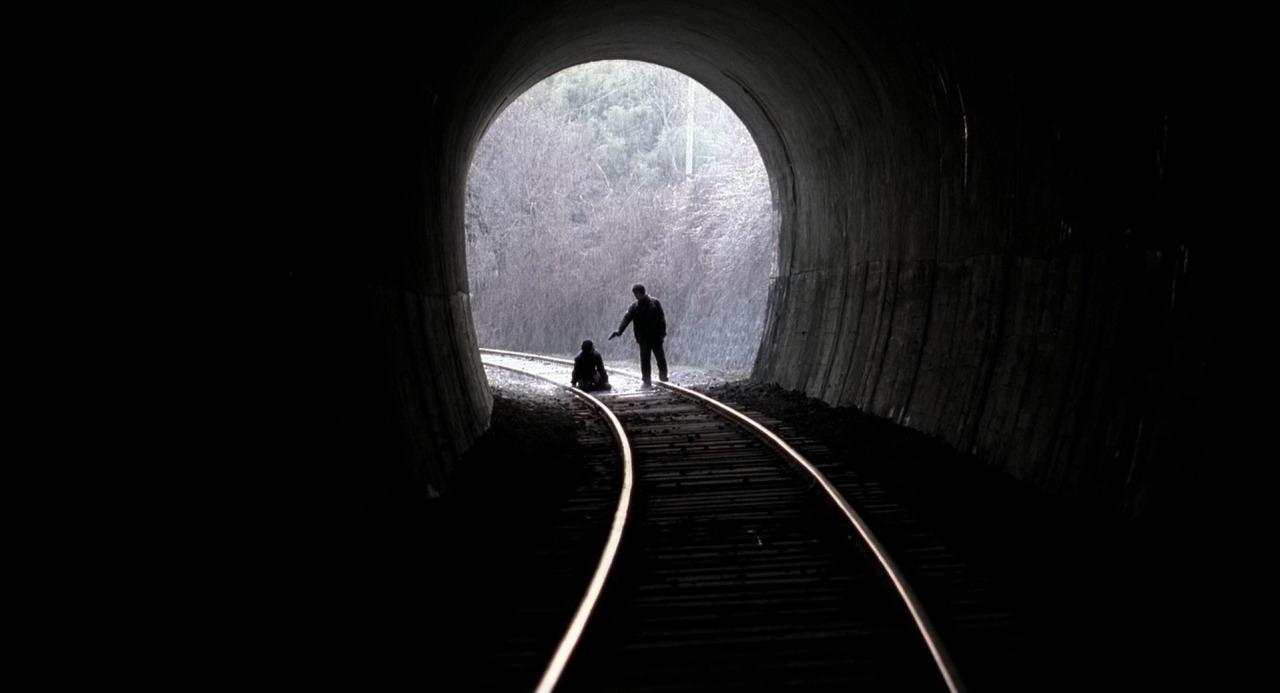
  • Along with obvious “high vs. low” imagery, Kurosawa plays with light and darkness. Gondo’s living room is flooded with white light, which makes him vulnerable. He must close the curtains to be safe. His wardrobe also goes from white to dark over the course of the movie.
  • T commented on how Westernized everything in 1960s Japan was. The characters wear business suits. The children pretend to be cowboys. There’s an extended scene in a frenetic dance club populated by Americans (where, according to IMDb, Tarantino got his inspiration for the famous scene in Pulp Fiction). Mrs. Gondo goes back and forth between wearing a traditional kimono and wearing the garb of an American housewife.
  • In American crime dramas, the detective almost always works alone, sometimes outside the bounds of the law. In High and Low (as in Memories of Murder, which I also watched recently), the detective is surrounded by a team. This is extremely obvious in the scenes where the members of the team report on their progress. The whole frame is packed with people.
  • Kurosawa’s long takes let the actors make the most of the time between cuts. ‘Twas delightful.

A Few Titles

That I’ve been reading lately.

  • Eothen by A. W. Kinglake – Once upon a time, travel narratives were all the rage, perhaps because, as someone (I forget who) guessed, tourism wasn’t viable for most people. Kinglake traveled to “the Orient,” by which he meant Turkey and Arabia. I came across this book in one of C. S. Lewis’s letters, where he speaks highly of Kinglake’s descriptions of the landscape. To my ear, the descriptions are fine enough, but nothing compared to, say, Mary Austin or John Muir. Maybe the comparison isn’t fair, though, since they were describing different landscapes. Lewis also praised Kinglake’s sense of humor, which I have enjoyed. Some sample quotes:
    • “…as grim as an army of giants with a thousand years’ pay in arrears.”
    • Describing Turkish: “The structure of the language, especially in its more lengthy sentences, is very like to the Latin: the subject matters are slowly and patiently enumerated, without disclosing the purpose of the speaker until he reaches the end of his sentence, and then at last there comes the clenching word, which gives a meaning and connection to all that has gone before. If you listen at all to speaking of this kind your attention, rather than be suffered to flag, must grow more and more lively as the phrase marches on.”
    • On the curmudgeonliness of the Greeks during their fasts: “The number of murders committed during Lent is greater, I am told, than at any other time of their year. A man under the influence of a bean dietary (for this is the principal food of the Greeks during their fasts) will be in an apt humor for enriching the shrine of his saint, and passing a knife through his next-door neighbor.”
  • Leave It to Psmith, P. G. Wodehouse – I realized partway through this book that I may have only ever seen the play. The book more than lived up to it. Psmith is the kind of character who should annoy you, but somehow does not, rather like Innocent Smith from Manalive. Incidentally, Wodehouse said that Psmith was his only character who was drawn from real life—apparently from Richard D’Oyly Carte, the man who brought Gilbert and Sullivan to the admiring masses. [Edit: Psmith was actually based on Richard’s son Rupert.]
  • House, Tracy Kidder – I bought this for my wife thinking a) it was by a woman and b) it was a collection of essays meditating on the significance of different rooms in a house. That would be a great book, but that’s not what this is. For one thing, it was written by a man. It is not a collection of essays. It is, however, about a house. It’s a non-fiction novel (think Capote’s In Cold Blood) chronicling the construction of a large home in New England. Though it’s not what I was expecting, it has been great so far.

A Verse for Teachers

Now we exhort you, brethren, warn those who are unruly, comfort the fainthearted, uphold the weak, be patient with all.

1 Thessalonians 5:14

Biblical Scenes

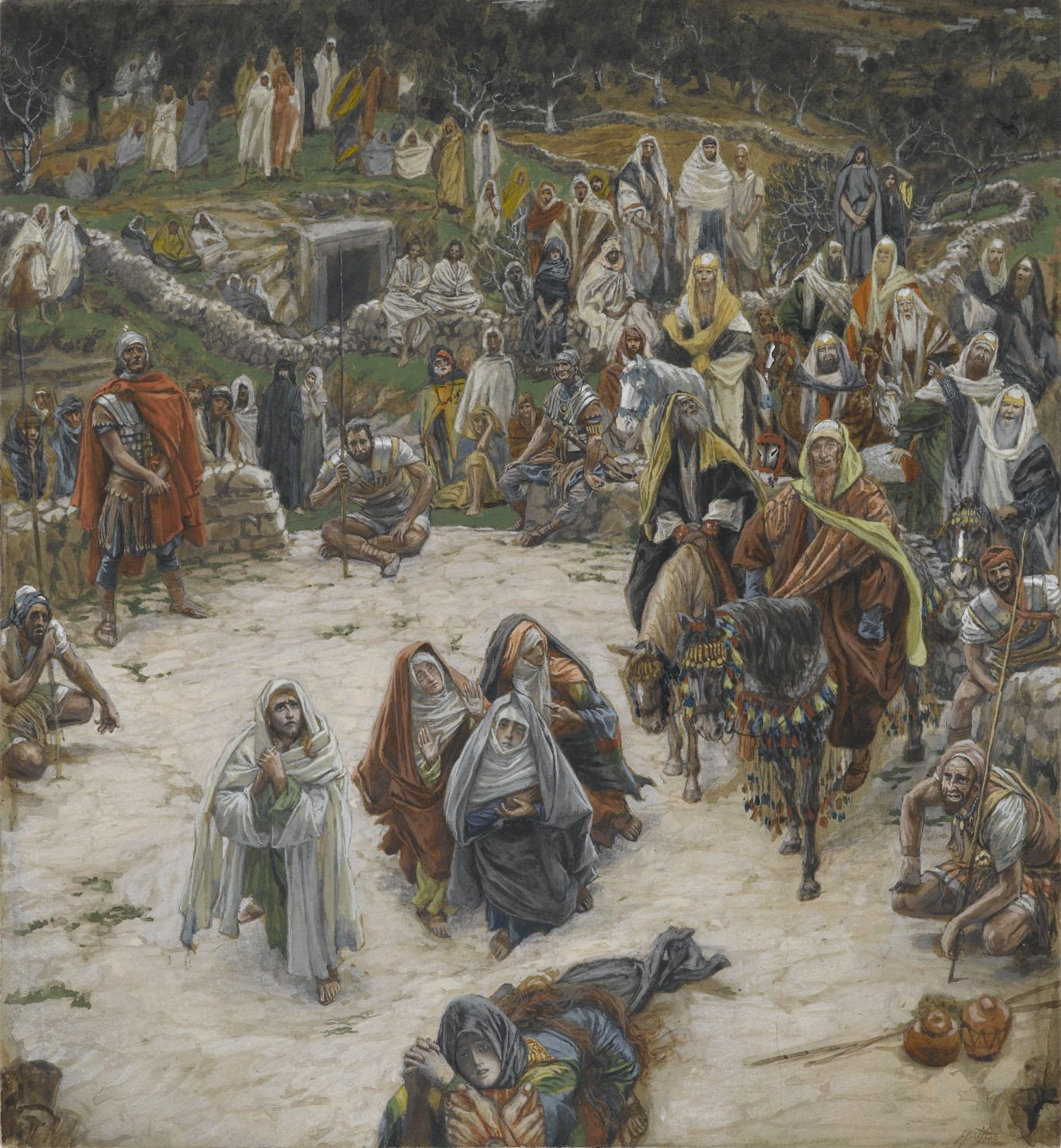
A few weeks ago, I asked my newsletter subscribers to tell me their favorite piece of visual art with a biblical subject. Here are the paintings they chose.

James Tissot, View from the Cross
Caravaggio, The Incredulity of Saint Thomas
Hans Holbein, The Body of the Dead Christ in the Tomb
Dante Gabriel Rossetti, Ecce Ancilla Domini
Caravaggio, Saint Jerome Writing