Photographer Elliott Erwin once said, “To me, photography is an art of observation. It’s about finding something interesting in an ordinary place … I’ve found it has little to do with the things you see and everything to do with the way you see them.” This quote is a mantra for photographer Alan Burles, who is constantly on the lookout for the odd in the everyday.
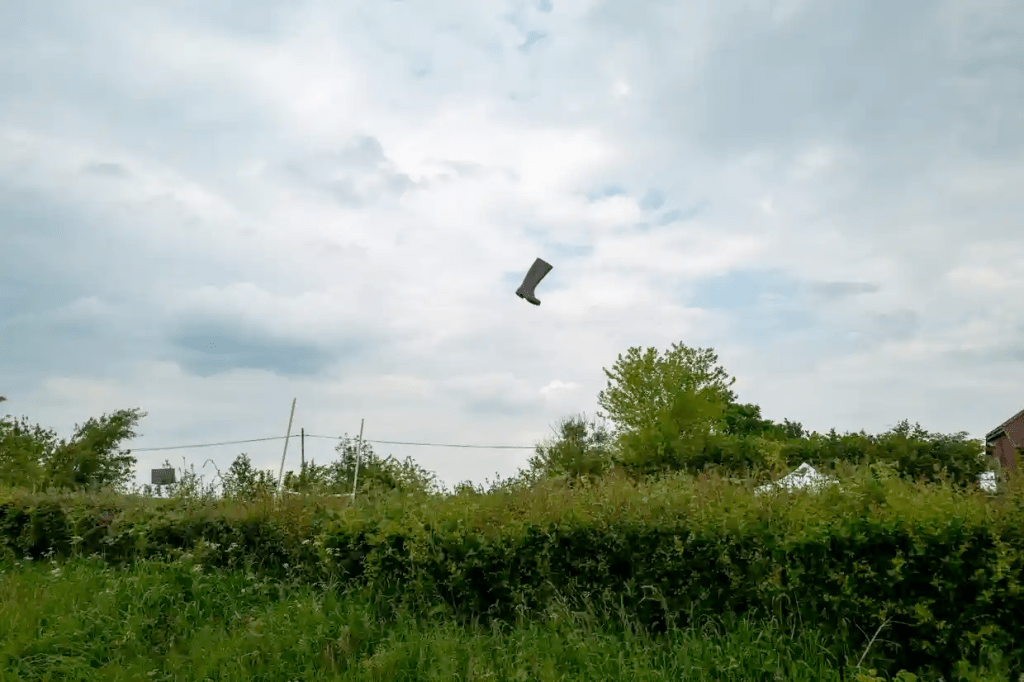
Above: Burles’s image of the “Welly Wanging Competition” in the village of Clifford, Herefordshire. Below: A serendipitous row of vans.

Writer Craig Mod writes here about the importance of walking—it’s his work, he says. He is a photographer as well as a writer, and carries all of his photography (and videography) equipment with him:
Depending on the day, I’ll walk anywhere from twelve to forty-five kilometers, carrying twelve kilos of photography and video equipment. I’ll interview several people each day, take portraits, photograph what “asks” to be photographed, sometimes record binaural audio, sometimes record video. I then arrive at the inn or hotel and settle in for some four to six hours of work / synthesis.
Both of these photographers write as if the photos are there, waiting to be found by the patient cameraman. The way they speak of their craft reminds me of Brendan O’Donnell’s excellent essay in the inaugural issue of my new zine Good Work:
The camera searches out land and buildings and trees beneath various kinds of weather. Structures groaning beneath the weight of use or neglect. People in various states of ignorance of the lens. Rights-of-way: railroads, rivers, roads; the vehicles upon them. That 50mm lens: if something is too far away, I can’t zoom in; I must walk or climb or drive closer. Sometimes I stay put and frame instead a faraway subject, but trains and rainsqualls will also obligingly close the distance. When the truck door is flung open, the spontaneity and urgency of the moment dictates that I bang the shutter a bunch of times in search of the thing I’ve seen. If time does not press on me, I hold the instrument at my chest, taking things in without technical mediation, and when I finally hit the shutter, I’ve made a more deliberate decision about what the tool sees. How the curve of that dirt road imitates the saddle in the hills above it. How the shadows cast from the poplars obliterate the detail in the wheat field beside them. How the low ceiling in the barroom hangs heavy over the shoulders of the man brooding over his drink.
Sign up for Good Work here.
(HT to Alan Jacobs’s newsletter for both linked articles above.)
 Christian Leithart