I’m digging through notes for a new piece and found this article referenced by Matthew Crawford in Shop Class as Soul Craft. This quote is relevant to my recent newsletter about the blogs I like:
There is a tangibility and satisfaction to buying – to picking out a new shirt or a new album and taking it home – that means that shopping remains for individuals a confirmation of their power to make things happen in the world.
[…]
Shopping remains a way in which our choices have a tangible effect, in which we can make something in our lives new and different. It also becomes the primary way in which people can enjoy the creativity and efforts of others, even if this is done unconsciously, without knowing who made something or how.
This is yesterday’s issue of Time’s Corner. Subscribe here.
One of the creepiest services I’ve ever come across online is an Amazon service called Mechanical Turk. The service is named after a sideshow curiosity from the 1700s, a turbaned robot that could beat any human at chess. It was touted as a marvel of mechanical engineering. The trick was that there was a small person inside the Turk, controlling its movements.
Amazon’s Mechanical Turk lets you remotely hire people to do menial tasks for miniscule sums of money. Let’s say you have a task so repetitive and boring that your mind gets numb just thinking about it—e.g., changing every “5” to a “6” in an Excel spreadsheet. Through Mechanical Turk, you can hire someone else to do it at a tenth of a penny per change. A Pakistani worker changes a thousand 5’s to 6’s and you pay him a dollar. What looks like an automatic system from the outside is actually a guy frantically clicking and typing on a computer. Unlike their eighteen-century counterparts, Amazon doesn’t try to hide the fact that there are humans doing the work. In fact, the tagline for the service (now removed from the website) is “Artificial Artificial Intelligence.”
Every machine in human history needs to be operated by a human at some level. An ax helps you cut down a tree, but you need to swing it. A BMW gets you quickly from here to there, but a person has to design it, build it, maintain it, and drive it. No matter how automatic or magical a manmade object seems, it always draws on human power to function. The ones that seem the most magical are the ones that keep the human operator most hidden, like the Eternal Engine in Snowpiercer that’s actually powered by small children stuffed between the gears.
It’s incredibly important for us to remember this. The worst part of AI tools is that they absolve people of their wicked deeds, or at least provide them with plausible deniability. Matthew Butterick aptly describes this as “human-behavior laundering”:
If AI companies are allowed to market AI systems that are essentially black boxes, they could become the ultimate ends-justify-the-means devices. Before too long, we will not delegate decisions to AI systems because they perform better. Rather, we will delegate decisions to AI systems because they can get away with everything that we can’t. You’ve heard of money laundering? This is human-behavior laundering. At last—plausible deniability for everything.
What AI really provides is an excuse. We’re not stealing your stuff. AI is. We’re not driving your car into an eighteen wheeler. AI is. We’re not whipping a crowd into a frenzy. It’s artificial intelligence. In other words, no individual person is responsible. It’s bureaucracy at its finest, the Orwellian passive voice writ large.
I’ve read bits and bobs by Robin Sloan before (thanks to link-meister Alan Jacobs), but I’ve never really spent time on his site or in his newsletter. I’ve been enjoying it very much recently, especially this edition. Some favs:
His habit of creating “mini-sites” for his books. I love this idea and would love to do it with my own projects.
Random asides, like this: “The wheel gets a lot of credit — and sure, wheels are handy — but more and more, I think the key to human civilization is probably: the pump.”
Or this: “A starling only knows a murmuration from the inside — a scrum of dark feathers, the bird beside them breathing hard. They can’t see or understand the larger object. […] Maybe I’m wrong. Maybe one starling gets to watch. Maybe, every morning, a single bird is chosen to sit it out, and regard, with wonder and satisfaction, their own species.”
This is this week’s edition of Time’s Corner, my bi-weekly newsletter. Sign up here.
For nine and a half years, I’ve kept track of all the movies I watch start to finish. At the moment, that number is six hundred and thirty-four, an average of one movie every five days.
What they are depends on the year. When my daughter was around three, we watched a bunch of Disney and Pixar movies together. When my son was born, I slept on a pull-out sofa in the basement and watched James Bond movies before falling asleep.
For most of 2014 I had no money and lived in a studio apartment without internet. Every Tuesday at work I’d check 99rental.com to find out which movie iTunes was renting for a buck that week. Most of the time I’d never heard of it. I’d download it anyway and watch it at home.
I used to spend a lot of time on Twitter, not talking, but listening. Twitter was a gold mine of information about movies & writing, straight from sources who knew. That was back when nobody knew that @Bitchuation was Steven Soderbergh and Rian Johnson was still unverified and dangerous. John August once argued with me about the ending to one of his own movies. All of these filmmakers constantly mentioned the movies, directors, screenwriters, editors, and cinematographers they loved, and I took note.
Most directors are avid movie fans. In the course of a ten-minute interview, Steven Spielberg might mention a dozen movies, some of which I’ve never heard of. He might say that one of them is “Fellini-esque,” leading me to look up Frederico Fellini and add a couple of his most highly rated films to my watchlist.
Speaking of watchlists, I use IMDb to keep track of what I want to watch, partly because it makes it easy to find out where a given film is streaming, and partly because it’s so easy to follow a thread from one film to another. For instance, watching The Untouchables a few years ago, I noticed how well the chase scene was shot (not to mention the reference to Battleship Potemkin) and looked up the cinematographer (Stephen Burum). One of the films he shot (The Escape Artist) was directed by another cinematographer named Caleb Deschanel (yes, Zooey’s dad). Never mind that The Escape Artist has a 6.8/10 on IMDb and a 58% on Metascore. A great cinematographer directed it and another great cinematographer shot. It goes on the list.
When picking a movie to watch on a Saturday night, and after convincing my wife to watch something obscure that may not be any good, I filter my watchlist by one of the streaming services we have access to (Prime, Netflix, Hulu, IMDb Freevee) and poke around for something that looks interesting. I know I’ll never get around to watching all the films that are on my list (there are exactly 1000 of them at the moment), and I know that not all of them are good. That’s fine. My watchlist functions like an anti-library, reminding me of all the movies, good and bad, that are out there. And once in a while, I do stumble across a gem. Here are ten of the best lesser known movies I saw for the first time in the last nine years:
This is this week’s edition of Time’s Corner, my bi-weekly newsletter. Sign up here.
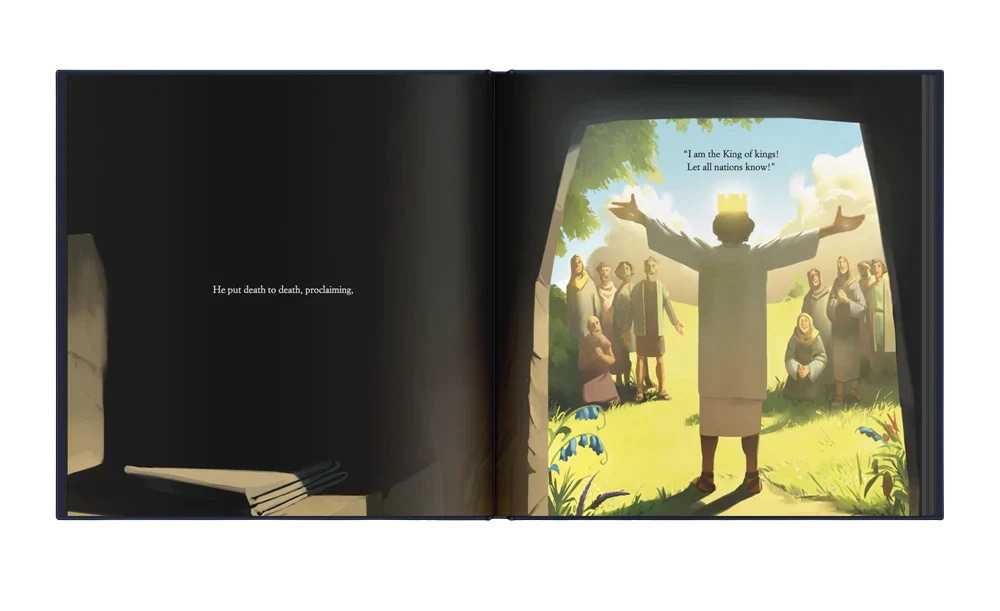
Behold! My friend Brian Moats and I have started a publishing company! It’s called Little Word. We create children’s books that teach Biblical symbols and patterns, particularly typological motifs. Read more on our website. (If you click on only one link today, make it this one.)
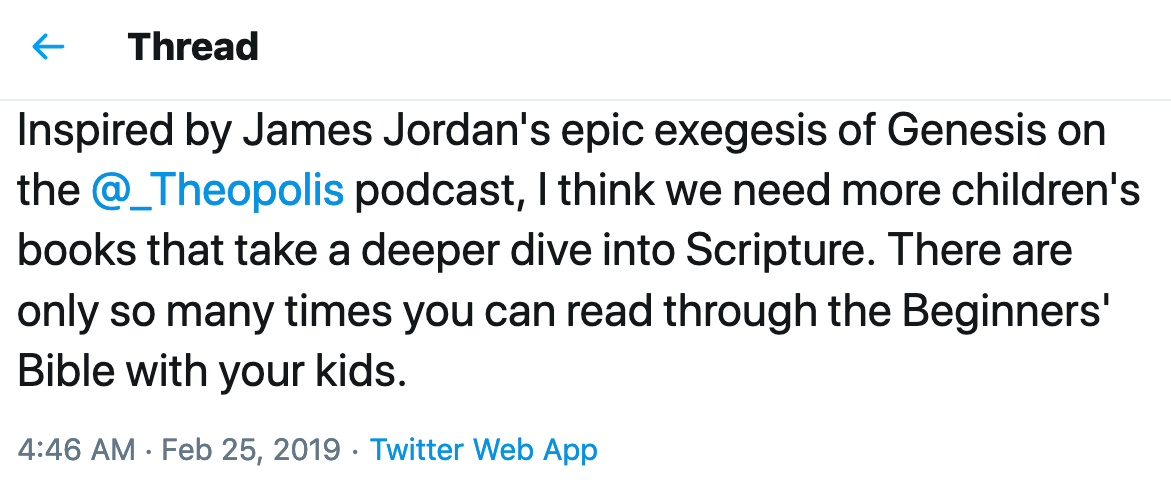
Years ago, I saw this posted on Twitter:
At the time, I had already toyed with the idea of creating a “Through New Eyes for Kids” book series, and when I saw this tweet, I realized a series like that would have an audience. I opened a notebook and started scribbling down ideas.
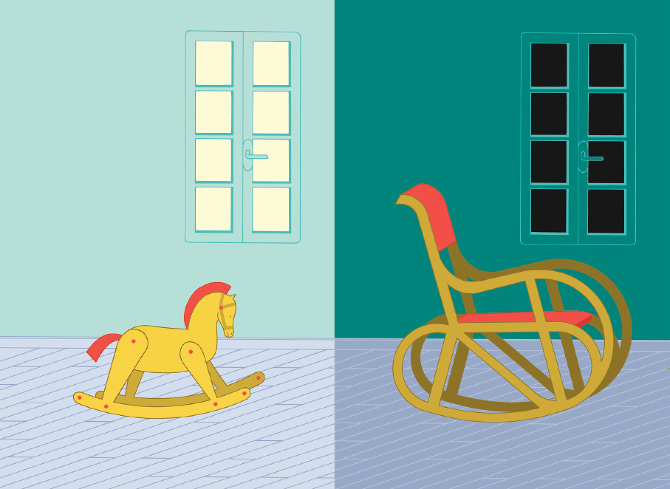
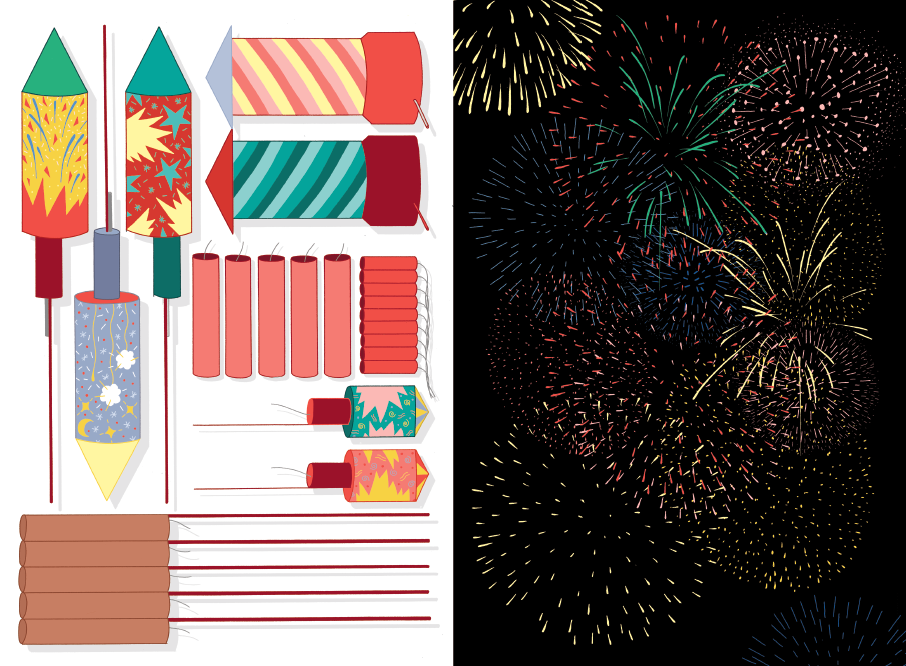
Later that same year, I happened upon Anne-Margot Ramstein’s picture book Before/After. There are no words in the book, nor any story. Instead, each page spread has two pictures side by side and you’re invited to figure out the connection between them. Despite the fact that there’s nothing to read or fiddle with, it’s one of the most interactive books I’ve ever read.
One of the most common connections between the two pictures is time—hence the name: Before/After. A beehive becomes honey. A jungle becomes a city. Sometimes, Ramstein highlights time’s cyclical nature. Day, night. Summer, winter. High tide, low tide. My favorite pages are where one object remains fixed while everything around it changes. Time acts more slowly on some things than others.
This struck me as powerful way to depict typology. Take Samson. Arms outstretched, one hand on each pillar, positioned in exactly the same way that Jesus was on the cross. Put Samson and Jesus on two facing pages and invite the reader to make connections between them. Even a child could do it—especially a child.
Aedan Peterson actually did something like this in Ken Padgett’s The Story of God Our King. Three sequential pages show Jesus in the same posture, arms oustretched, while the scene changes around him.
Pretty cool.
Meanwhile, in his home office, Brian had been editing hours upon hours of footage of Jim Jordan, Peter Leithart, Alastair Roberts, and Jeff Meyers talking about Biblical typology. He had taught youth Sunday school classes on Through New Eyes and The Lord’s Service and found his students extremely receptive to the ideas in those books. It was just a matter of time before Brian decided to adapt Jordan and Meyers for kids. He approached me about the idea and lo! Little Word was born.
I’ll keep you updated on our progress here at Time’s Corner, but the best way to stay informed is to follow Little Word on all the socials. Click for the ‘gram, the Tweetster, the Facity-Face, etc.
The first issue of my newsletter went out this morning, including a short essay I called “Writing in War-Time.” You can read it below, and, if you so desire, you can subscribe to the real deal here.
In 1939, almost two months after England declared war on Germany, C. S. Lewis gave a lecture about the importance of studying the humanities during a World War. Why waste time with such “placid occupations” as philosophy and literature, he asked, when men are dying in battle and the threat of invasion hangs over the nation?
We’re not in the middle of a World War, thankfully. But many of the same conditions that Lewis was concerned with exist today. A lot of people around the world are in very real danger, if not from the mysterious plague known as COVID-19, then from riots and civil unrest. It’s hard to read the headlines without dread. In such an environment, we may ask the same question Lewis poses: why spend time doing anything but the most essential activities?
Of course, what activities qualify as “essential” changes depending on who you ask (shopping? protest? worship?), but the question remains the same. In extreme circumstances, how do we justify wasting time on non-essentials? In Lewis’s lecture, “non-essentials” include studying the humanities. For me, they include writing children’s fiction and mulling over poetry while staring at the wall.
In his typical fashion, Lewis reframes the whole conversation. It’s wrong to ask whether studying (or writing) is the right thing to do in the middle of a war, he says, because the question assumes that war presents an unusual danger that must be met with an unusual response. The reality is that we are always in danger of our lives. None of us can be sure that he will be alive tomorrow. A better question, then, is whether studying or writing is ever the right thing to do. Why spend time reading Aristotle when you could be protesting? Why spend time writing poems when you could be saving souls? Why not do things that matter?
Lewis answers the question from many angles, but part of his answer is this: we waste time on “non-essentials” because we can’t help it. It’s human nature to play cards on the eve of battle. When city workers tore down a Confederate memorial in Birmingham in the middle of the night last week, they stopped for a pizza break. Even SWAT teams crack jokes on duty.
In the direst circumstances, people stubbornly remain people. They keep on humming, snickering, debating, reading, reciting, and contemplating. This means that they need good songs to hum, good jokes to laugh at, good ideas to debate, good books to read, good poetry to recite, and good art to contemplate. As Lewis says, “You are not, in fact, going to read nothing, either in the Church or in the [battle] line: if you don’t read good books, you will read bad ones. If you don’t go on thinking rationally, you will think irrationally. if you reject aesthetic satisfactions, you will fall into sensual satisfactions.”
Writing in the midst of pandemics and protests is, from the vantage point of eternity, not that different from writing at any other time. The only difference is that it’s much easier to get distracted. But the importance of the work remains unchanged. The world will have stories, and those of us who are blessed with the opportunity to write them must give the world good ones.
The world is calling us to action. But what should the artist do? Should artists set aside our pens and paintbrushes and pick up swords? The answer is far simpler and far more difficult. In times like these, the artist ought to stick to his work. Are you a chef? Make delicious food. Are you a musician? Play beautiful music. Are you a filmmaker? Capture moments in time. This present moment needs good works of art no more or less than any other, which means that it needs them vitally.
For manifold reasons, I’ve decided to start a newsletter. I’m calling it Time’s Corner, after a phrase the Green Lady says to Ransom in Perelandra.
Do not wonder, O Piebald Man, that your world should have been chosen for time’s corner. You live looking out always on heaven itself, and as if this were not enough Maledil takes you all thither in the end. You are favoured beyond all worlds.
What the Green Lady is refering to is the time and place at which all of reality bends: the death of Christ on a cross in Jerusalem. I don’t pretend that this newsletter will be anywhere near as significant as that Event of Events, of course. But I do want the things I write about here to direct the attention of whoever reads them to that most crucial point. After Jesus died, rose, and ascended, nothing was the same, and that includes writing, art, and email newsletters. We’re still figuring out its ramifications. Consider this another teeny push in that direction.
Here’s the plan. On Mondays, I’ll send out a mid-length essay about writing, literature, or art. At the end of the Monday issue, I’ll ask my readers a question, like, “What’s a non-biblical quote or poem that never fails to encourage you?” On Thursdays, I’ll send out my favorite responses to the question, along with some comments.
If that sounds like a jolly old time to you, sign up here.





 Christian Leithart