There is only one thing that a drama cannot depict—that is a hard day’s work.
G. K. Chesterton, What’s Wrong With the World
A Man is Outside Again

Yesterday, Birmingham asked residents to “shelter in place,” which means only leaving the house for essentials. I think the city gov does count exercise as an essential, but in any case, I’m glad we went to Sicard Hollow before the announcement was made.
Fat clouds, strong breeze, open space. Apart from the humidity, I could have almost believed I was back in Idaho.
Banishment as a Way of Life for a Man
Television is a product, not a medium, and everything you see and hear is produced by people terrified that they might be banished from the castle tomorrow and lose their limos and expense-account lunches and become peasants again, so there is mighty little courage or playfulness, as there is in poetry, which is entirely created by peasants, every word. Banishment is a way of life for poets, so what’s to be afraid of?
Garrison Keillor
HT Daniel S.
A Man Stays in Constant Contact
The principle of growth means we have to move on, but it also means that we cannot move on until we understand our heritage. To try to generate good church music out of the meager vocabulary of American popular music is like trying to generate good theology out of the ideas heard on Christian radio and television. Christian theologians need to acquire familiarity with the whole of the Christian past, in constant contact with the primary special symbols, in order to move forward into new man-made theologies. Christian musicians must know all the music of the Christian past, in constant contact with the primary special symbols, in order to produce good contemporary Christian music.
James Jordan, Through New Eyes, p. 37
If you took a gander at my media diary, you’d notice that I spend a lot of time reading theology. Why be theologically literate, you might ask, if you write fiction? What’s the point? The point is exactly what JBJ explains above: in order to produce good Christian stories, the writer must be in constant contact with the primary special symbols, which means reading, examining, and knowing the Bible.
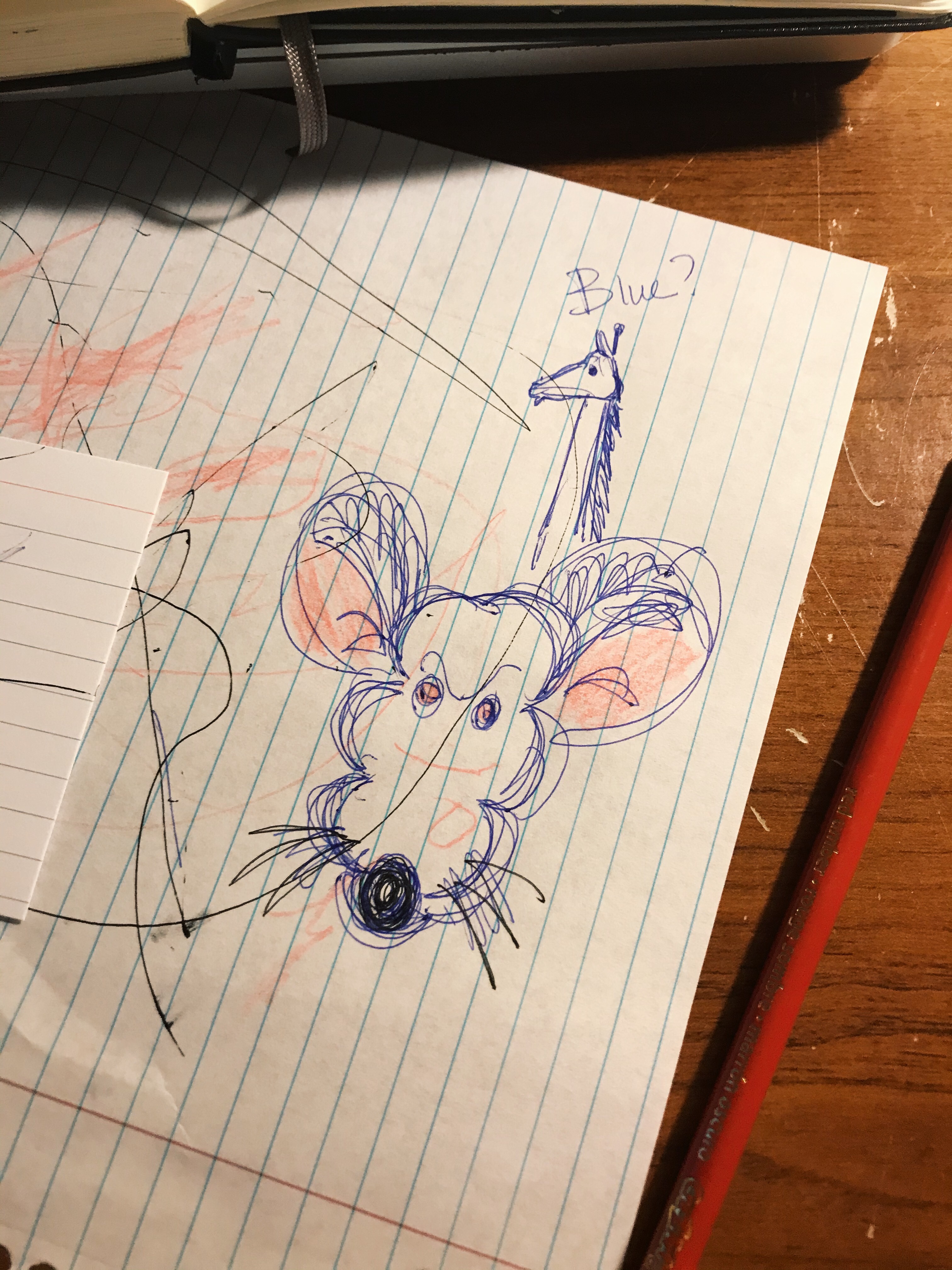
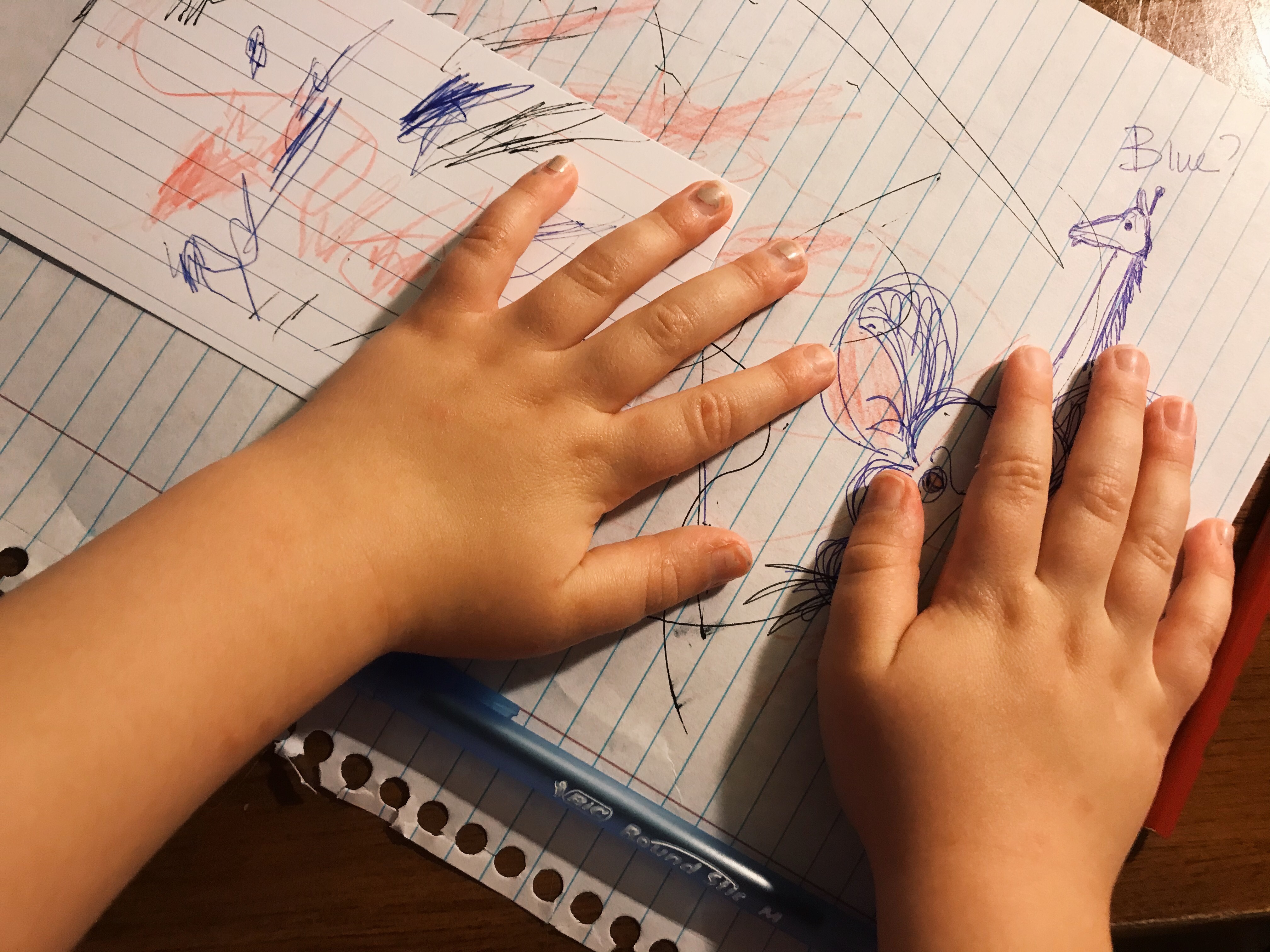
A Man Draws with a Toddler


A Man Looks Forward
Invisible, yet active, headless, crowned,
A microscopic devil holds us bound
Inside our homes, aflush with fear
And fever, waiting for the axe.
We dread as much the atmosphere
Of quiet thought as brash attacks,
For contemplation shows us that the soul
Is damaged. Splendid, surely, but not whole.
In lieu of sackcloth, ghostly masks are wrapped
Around our mouths as, gasping, we adapt
To quarantine, these forty days
Of washing, fasting, sacrifice.
Each of us in our closet prays,
Raw fingers gripping in a vice
The subtle heart that brought us to this end
We knew would come, but could not comprehend.
Is there no mercy tipping heaven’s scale?
If viruses and panic cause travail,
They further make us look inside
Ourselves, undrape the sheeted mind,
And recognize the gods we tried
To curry favor with are blind.
The firmament above burns brilliantly
When Easter dawns. Oh, give us eyes to see!
A Man Smudges Productively
Austin Kleon writes about chalkboards, quoting this NYT article:
In many fields of science and investigation, blackboards have been replaced with whiteboards or slide show presentations. But chalk is cheaper and biodegradable. It smells better than whiteboard markers and is easier to clean up, mathematicians say. It is also more fun to write with.
One of the chalkophiles he cites says that “the value [of chalk] is in using it up.” This is one reason I love using wooden pencils. Yes, you have to sharpen them, but you get to measure your work against the diminishing length. Empty pens, too, give me the same satisfaction.
Austin’s post reminded me of this NHPR story (that’s New Hampshire Public Radio) about why mathematicians love using chalkboards. Here are a few of the juicier quotes.
On the sound chalk makes on the chalkboard:
It’s much louder than any other writing implement would be. And as a result it’s much harder to interrupt somebody who’s writing on a blackboard. So if you’re up there, it’s like there’s this noise that keeps you from saying “Wait a minute! What about this?” whereas if you’re writing with a marker on a whiteboard, it’s easier to interrupt. This actually leads to longer flow of thoughts, which is important in mathematics; you’re not breaking it up as much. So that’s one possibility.
On the size of the writing:
You have to write big. Easier to see. But also it means you can fit fewer character on, you have to be more concise. And frankly, conciseness is what mathematics is. Mathematics is distilling information down to the minimum amount of characters. That’s really the essence of it. So that contributes to it.
On “productive smudging”:
Another thing he talked about that’s actually useful, and this is my favorite one, he said that blackboards smudge productively, which is just a great line. You know, you’re writing on a blackboard and oops, you make a mistake, you can rub it out with your hand, or you rub it out with an eraser. And it’s really easy to do. But it’s really hard to do it completely. You can’t get rid of it entirely. There’s always a little bit of a smudge and you write over it. And I’ve always thought that was a bad thing. And he argues that for mathematics, and particularly mathematics research, it’s a good thing because a lot of math research involves taking existing concepts and applying them in new ways. And so if you’ve written an existing equation everybody’s familiar with and then rubbed out a part of it and written something new over it, there is a visual sign that you have taken an existing concept and tweaked it, which is sort of like a reminder to the people in the audience that this is how you approach it. This is not some new thing you’ve brought down from on high, it’s an alteration of an existing one.
A Man Winces
The Bible is not designed for lazy people.
~ A. W. Pink, Practical Christianity
A Man at a Distance

 Christian Leithart