Now we exhort you, brethren, warn those who are unruly, comfort the fainthearted, uphold the weak, be patient with all.
1 Thessalonians 5:14
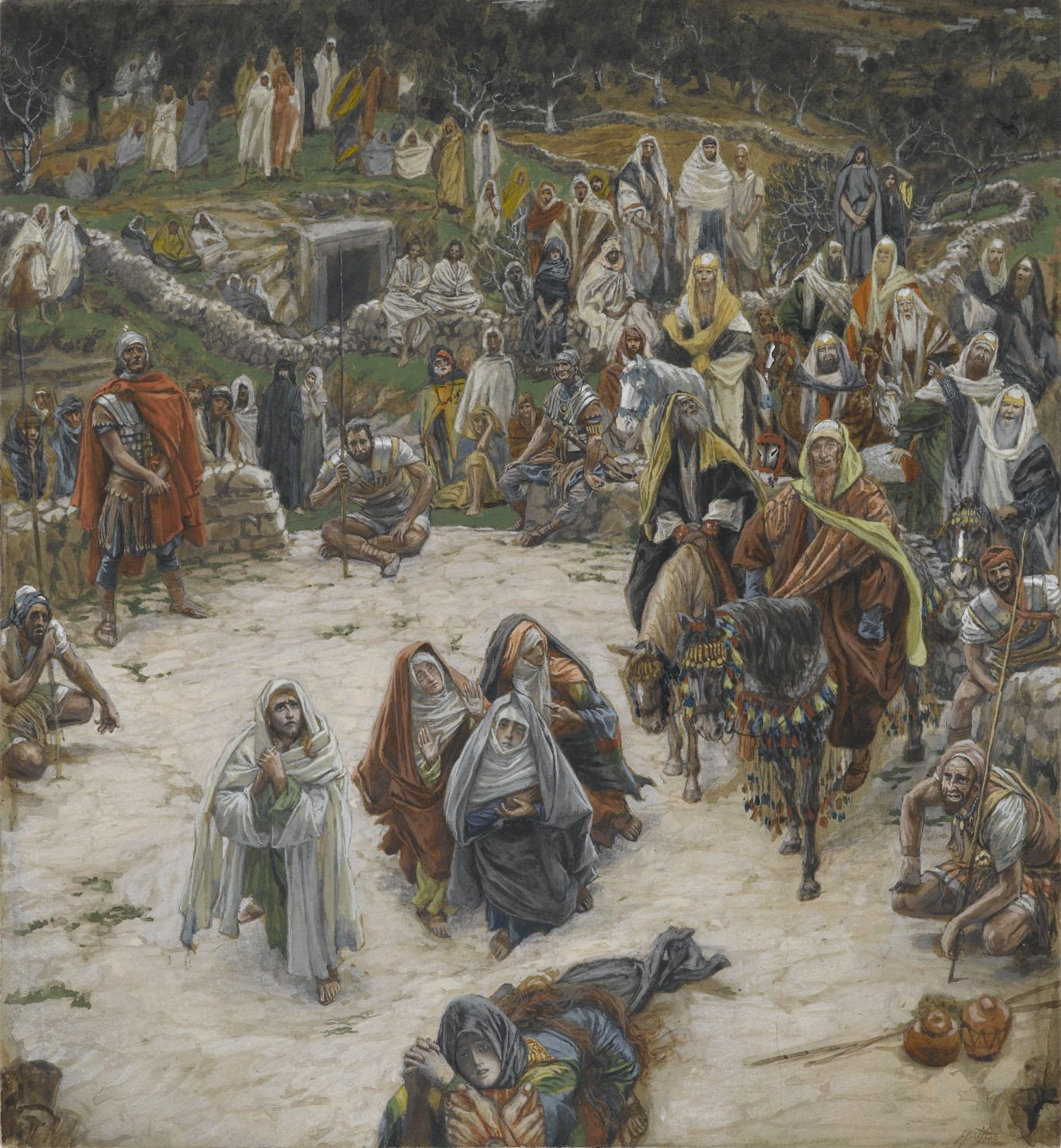
A few weeks ago, I asked my newsletter subscribers to tell me their favorite piece of visual art with a biblical subject. Here are the paintings they chose.


In the last several years, it has become common to hear about the importance of being a “lifelong learner.” While the first time I ever heard the phrase was in the context of classical education, I have since learned it derives from the world of TED talks and corporate virtue signaling. If one considers the term for a moment, it becomes suspect. A lifelong learner of what? In and of itself, learning has no moral value. Learning can be good or bad. Eve learned quite a lot when she ate of the fruit. In the dark corners of the internet, one may learn all sorts of wretched and destructive things. But in the pages of Scripture, we can learn of Christ and be saved. In the pages of old books, we can learn wisdom.
Josh Gibbs
Learning is not virtuous unless one is learning virtue.
What is more, acting as if it is an accomplishment to be a “lifelong learner” sets the bar ridiculously low. The modern man lives in a deluge of information where he is constantly hearing trivial facts, lurid stories, and inconsequential data. We browse the internet every day, we read the news every day, we watch banal documentaries on Netflix all the time, and then we forget most what we learned because it wasn’t important or because it asked nothing of us. Simply put, we’re already lifelong learners. Lifelong learners need nobler, higher, and more definite ambitions.
I’m making my way through J. Gresham Machen’s Christianity and Liberalism and will be posting some of my notes here. Describing the woeful tendency of liberalism to quash all higher aspirations in favor of “drab utilitarianism,” Machen gives this example:
In the state of Nebraska, for example, a law is now in force according to which no instruction in any school in the state, public or private, is to be given through the medium of a language other than English, and no language other than English is to be studied even as a language until the child has passed an examination before the county superintendent of education showing that the eighth grade has been passed. In other words, no foreign language, apparently not even Latin or Greek, is to be studied until the child is too old to learn it well. It is in this way that modern collectivism deals with a kind of study which is absolutely essential to all genuine mental advance. The minds of the people of Nebraska, and of any other states where similar laws prevail, are to be kept by the power of the state in a permanent condition of arrested development.
Machen, Christianity and Liberalism
What is curious about this example is that it is the exact opposite of what today’s liberal would advocate. Public school teachers and boards in many states are strong proponents of teaching in multiple languages, especially Spanish, and of striking down English-only laws. I can’t imagine a law being passed that would prevent a school from teaching a non-English language before eighth grade. (In fact, the law Machen refers to was revoked in 1923, the same year Christianity and Liberalism was published.)
How can it be that what Machen saw as an example of liberalism would now be seen as an example of extreme conservatism? My guess is that he would argue that A) is it still utilitarian (bi-lingual education results in higher achieving graduates, which results in higher achieving citizens, etc.) and B) that both banning and requiring multiple languages in school are examples of the state meddling in the private affairs of citizens.
You may not know that the IMDb iOS app lets you sort lists by where they are currently streaming. For a long time, Instantwatcher.com was where I went to find out whether anything worthwhile was available on Netflix or Amazon. The IMDb app is way better. Let’s say you’re a huge Spielberg fan. Go to his filmography page and tap Streaming at the top. You’ll see a list of all sites that are currently streaming anything by Spielberg. Here are some screenshots to illustrate.


“Even if there be no hereafter, I would live my time believing in a grand thing that ought to be true if it is not. And if these be not truths, then is the loftiest part of our nature a waste. Let me hold by the better than the actual, and fall into nothingness off the same precipice with Jesus and Paul and a thousand more, who were lovely in their lives, and with their death make even the nothingness into which they have passed like the garden of the Lord. I will go further, and say I would rather die forevermore believing as Jesus believed, than live forevermore believing as those that deny Him.”
~ George MacDonald, Thomas Wingfold, Curate
Puddleglum must have been a MacDonald fan, according to what he says to the Queen of Underland:
Suppose this black pit of a kingdom of yours is the only world. Well, it strikes me as a pretty poor one. And that’s a funny thing, when you come to think of it. We’re just babies making up a game, if you’re right. But four babies playing a game can make a play-world which licks your real world hollow. That’s why I’m going to stand by the play world. I’m on Aslan’s side even if there isn’t any Aslan to lead it. I’m going to live as like a Narnian as I can even if there isn’t any Narnia.
The Silver Chair (via Goodreads)
(MacDonald quote via Alan Jacobs)
Alan Jacobs has not responded to my post (the nerve!), but in an attempt to treat him as fairly as possible, I draw your attention to this post about his love for Jesus — or perhaps more accurately, Jesus’s love for him.
Every day I want to evade him, to look the other way, and when I do my faith wanes and weakens; but when I look, when I draw near, I remember what I’m all about, what the world is all about. When I look towards Jesus I am caught and held, even if sometimes shattered by what I see.